Friday, 7 July 2017

4 Tips for Creating A Killer Video Voicemail

Using video in email outreach is something that we’ve seen a lot of success with. Whether you’re in sales trying to book more meetings, in marketing communications trying to convey your message, or even in higher education trying to connect with your students, people enjoy something that has been crafted and personalized for them. However, the battle doesn’t end with getting people to click play! Making the content meaningful and engaging is what really brings your message across and helps ensures you get a satisfying 100% watched notification.

But how do you do that? Let’s start with an example and break down what works:

The Hook

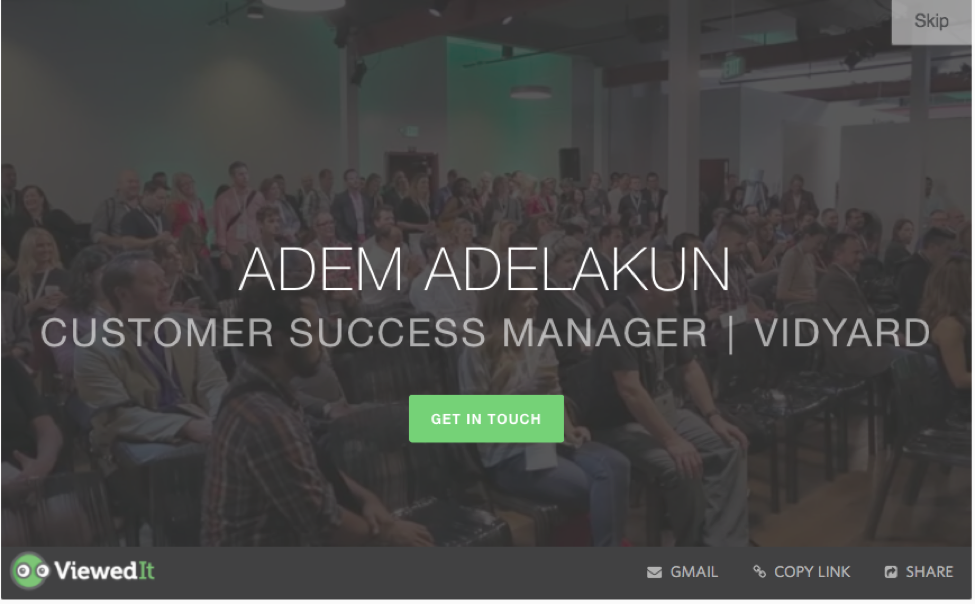
Whether it’s a pop song or a sales video, you have to have a hook to get people engaged. The best way to do this with video is to introduce yourself, tell them why you are reaching out, and what about them made you want to reach out in particular. For example, in the video above, I mentioned their title and some of their responsibilities that I found on LinkedIn. If you are going for a more account based approach, you can mention a piece of news like a successful funding round. Showing you researched shows you care!

Your Attitude

Like my eighth grade teacher told me, any good presentation requires a positive attitude. This is easy to show in video format, as relaxed, open body language, facial expressions, and hand motions make for a better experience than rigidity. Protip: Speak with a smile, it goes a long way.

Showing Value

A question you should always ask yourself before filming a video for someone is: “Why?” – as in, “Why should this person want to start a conversation with you?”, “Why are you reaching out to them?”, or “Why should they keep watching?” In a limited amount of time, you need to touch on where your solution could fit into their initiatives or solve their pain points. In the video above, I mentioned speeding up the sales cycle, booking more meetings, and reengaging with cold contacts as being of interest to many sales leaders. Again, research is key!

Calls-to-Action

There are two calls-to-action that you should consider placing at the end of your video.

Verbal calls-to-action are centered around what you’re looking to gain from the person you have sent the video to. Are you looking to learn more about their business, to schedule a demo, or just introduce yourself? Make your intentions known at the end of the video so that your contact understands what next steps would be.

Visual calls-to-action determine what happens when your video is finished. Depending on your expectations with the contact, a variety of events can play once the video ends in order to streamline the communications process. For example having another video, like a microdemo or Chalk Talk play right after is a good way to give more information to your prospect. Having a scheduling event, like Calendly, works wonders when trying to book meetings:

Calendly CTA

And a newsletter/event signup can bring key individuals to your tradeshows and booths with greater efficiency.

Signup CTA

Our team has tried numerous techniques with our video voicemails, and have come to the conclusion that with these four steps, any team can start engaging better with video! If you’d like to start succeeding with your own video voicemails, download Viewedit today.

The post 4 Tips for Creating A Killer Video Voicemail appeared first on Vidyard.


source http://www.vidyard.com/blog/4-tips-creating-killer-video-voicemail/

Thursday, 6 July 2017

Best Practices for Prospecting with Video

Personal video messages are a great way to stand out and to boost response rates when prospecting new customers. But to do it right, it takes more than just pressing record and reading the same old script. My name is Tyler Lessard, and in this Chalk Talk we’ll discuss the latest best practices for creating personal video messages proven to convert.

Top sales teams are using personal video messages to boost their response rates by up to five times, and they’re doing that by creating messages that are personal, relevant, and specific to that individual. Perhaps most importantly they are creating messages that are human, that showcase that there’s a real person on the other side of that message to help create empathy with that prospective buyer. They’re not only creating the right types of messages, but they’re using different types of messages at different stages of their sales cadence to test different things and to see what may resonate best with each individual prospect.

So let’s talk about the types of messages and how you can use them at different stages of your sales cadence to maximize your response rates.

Sales Selfies

The first types of messages that we see people using today are the webcam or selfie videos. This is where you simply click record using a tool like those that Vidyard provides, on your laptop to record a quick personal message It might simply be an introductory message, like “Hi, my name’s Tyler. I’m from Vidyard. And we’re helping businesses like yours solve problems A, B, or C.” Simply having a human talking on camera as opposed to a long text-based email can help you boost response rates.

But what can help you boost it even more is by having something like a whiteboard where you can write the individual person’s name or their company name right inside a specific message. This works because it can create a thumbnail image for your video that gives that person a visual cue that this message is just for them, and it hasn’t come from some automated email marketing blast.

When somebody sees their company name or perhaps a message that simply says “Hi Joanne,” they know that I’ve recorded this specifically for them, and therefore are much more likely to respond. Now the whiteboard works really well because I can simply wipe this off, write the next name in, and record my next video. It’s a very efficient way to do highly-personalized communications at scale.

Now, you can use a webcam video to introduce yourself and the problem you’re solving, but you can also use it as a way to introduce a related resource. You may already be sending emails to introduce the new ebook your company’s released, or an upcoming webinar or a new video that you’ve launched. What if instead of just writing a text-based email telling somebody they should check it out, what if you record a quick message introducing the resource and explaining why it’s relevant to them, and why you think they may find value in it. That can be a great way to not only boost response rates to that related asset, but you might also find value in the people that engage in your video. They may not take the next action, but you know they’ve now watched it, they know who you are, and you’ve created a much better connection with them than just being one of 100 text-based emails that they tend to ignore.

When you’re doing these selfie or webcam videos, consider your lighting and your audio and your surroundings to make sure the videos look and feel professional. Smile, be friendly, be casual. This is the time to create a personal connection, not to read a script and to be stiff on camera.

And finally, think about what your thumbnail image is going to be. That could make the difference between a click-through and not, so use tricks like the whiteboard. One of our reps was selling to a shoe company and they genuinely held up one of that company’s shoes on camera. And sure enough, that person clicked through because they were interested to see what that person was talking about. Be creative and think about what that visual cue is to get them to connect!

Sharing Your Screen

The second type of personal video message you can create is the screen capture video. And this is where you use a screen recording tool like those provided by Vidyard to record something relevant to that individual. Use it as a visual cue in your thumbnail image, and show that this is something they want to watch.

So for example, you may want to pull up a website that might be relevant to the conversation. It could be your website, it could be a customer success story, it could be a product page, and this gives you an opportunity to talk about how that’s relevant to them. But what works even better is bringing up their website. Imagine you work at GE and you get a video in your inbox with GE’s website and somebody in the corner talking about it. Now, that might generate a response because that person is very interested and curious – what is this person talking about and why are they on my website? But then you quickly convert the messaging into how you can help them solve a related problem, and bring it all home.

The other thing you can try, probably not early on in your cadence and use it with discretion, is pulling up their competitor’s website to talk about how that company is doing something interesting or how you’ve helped them solve a specific problem. That just might get their attention!

The other types of videos you can do are pulling up a social profile or a social article that is relevant to that individual. Let’s say I’m prospecting Karen Smith at GE, and I go onto Karen’s LinkedIn profile and I record a quick video of myself in the corner scrolling through her LinkedIn profile. But what I’m doing is quickly saying, “Karen, I see that this is your role in this company. Based on that, I may be able to help you do A, B, or C. I’d love to chat to learn a little bit more about what problems you’re trying to solve.” That can be a great way to visually get Karen to click, because when she sees her own LinkedIn profile she’s going to be curious. But then quickly convert the messaging into something that’s relevant to the conversation you want to have. You can also pull up a social share or an online article that they recently engaged in, to share your perspective on that article and again to transition back to the conversation you want to have.

These are all ways to give somebody a visual cue in that thumbnail image that this message is specific and individual to them, which is the big magic to helping drive your response rates up by three, four, or maybe even five times.

Getting the Timing Right

With respect to when to use these types of videos in your sales cadence, early on in your sales cadence think about doing a website capture video but at a company level. So let’s say I’m prospecting GE. I might do a video when I’m on GE’s site, but then send it to 10, 15, 20 people at that account to see who’s going to engage in it. It’s a very efficient way to do a scalable, personalized message to multiple people at the same account.

The next thing I may want to try is a webcam video to introduce myself. Now, I’m getting a bit more personal and talking specifically to that individual – how I can help their role and solve some specific problems for them? As I move through, I may have sent an email, left a voicemail, and maybe I now bring up their LinkedIn profile or a recent article that they commented on or shared. This is now a much more personal connection, and I’m going to talk about how I can help them with the related problem or something that’s specific to them as an individual.

And finally, late in my sales cadence, now’s the time to pull out maybe the competitor website video or one final selfie video with a custom message to see if I can get their attention before I move onto my next prospect.

So lots of different ways in which you can use personal video messages to stand out, to create thumbnails that people just can’t resist, and to boost your response rates by up to five times.

My name is Tyler Lessard, and this has been a Vidyard Chalk Talk.

The post Best Practices for Prospecting with Video appeared first on Vidyard.


source http://www.vidyard.com/blog/best-practices-prospecting-video/

Wednesday, 5 July 2017

Control the Conversation with Disruptive Video Storytelling

How does market disruption occur? Contrary to popular belief, it doesn’t begin with technology. For every super successful company, there was nearly always someone who did the same thing before. For YouTube, there was Shareyourworld. Before Dropbox, there was Microsoft SharePoint. And before Uber, there were plain old yellow cabs.

What allowed these brands to blossom into household names and disrupt their markets even when they weren’t first? The answer, at least in part, is their use of disruptive storytelling.

This is the process by which you reset the public narrative by telling a new story—one that makes your competitors look obsolete—and align your product with that story.

Here’s the formula:

  1. Tell the old story
  2. Tell why that way is deficient (highlighting people’s frustration with it)
  3. Suggest a solution

Now, you could suggest your product as the solution, but then the idea won’t travel quite as far. It carries an inherent bias. Instead, suggest a solution in broad terms.

Take for example how Salesforce turned a disruptive story into a multi-billion dollar company.

How Salesforce Made it Big

When Marc Benioff left Oracle in 1999 to found a competitor, Salesforce, he didn’t want to just promote the idea of cloud-hosted software: he wanted to own the narrative. Unlike Salesforce’s new cloud-based solution, Oracle’s software had to sit on servers in clients’ offices, and Benioff highlighted that difference by inventing the term “on-premise.”

By promoting the idea that on-premise was inefficient compared to the cloud, Benioff put Oracle in a semantic box and forced Oracle’s sales teams to fight an uphill battle explaining why on-premise wasn’t so bad. Whenever customers thought of anything other than on-premise, Salesforce was top of mind. With disruptive storytelling, Benioff took a huge bite out of Oracle’s market share and Salesforce has grown to a $65 billion company.

Now, not all marketers have the resources, the network, or the writing chops to engage in a large-scale propaganda effort like Salesforce, but that’s part of the value of disruptive storytelling: it’s viral in nature. Once you plant the idea that whatever already exists is ineffective, word spreads—and fast. It becomes the zeitgeist in your category, and people begin seeking out solutions like yours.

And today, with the speed at which word travels online, it’s easier than ever, and more and more companies are doing this via video manifesto. Let’s look at a few.

Meet the Video Disruptors

Dollar Shave Club – Who really needs ten blades?

Perhaps one of the greatest disruptive videos ever to strike the consumer space was Dollar Shave Club’s “Our Blades Are F***ing Great.” Released in 2012, CEO Michael Dubin hits the nail on the head by calling out the veritable nuclear arms race of razor features with his line “Do you think your razor needs a vibrating handle, a flashlight, a backscratcher, and ten blades?” Beyond its humor, the video made a relevant point that landed well with audiences: old razor companies are expensive and unnecessary. According to Entrepreneur, within 48 hours of its release, the video netted Dollar Shave Club 12,000 new customers.

Airbnb – Why settle for ‘stay’ when you can belong?

What did we used to do before Airbnb? Oh yeah, we’d rent hotel rooms or vacation homes. But there is something disjointed and impersonal about staying somewhere new and exciting with people you don’t feel connected to. If you’re in Tokyo or Paris or Sao Paolo, and your first welcome is from an uncaring attendant, it dulls the shine on your vacation. What if there was a way to stay more cheaply with locals and feel more connected? There’s now a market for that in the ‘space sharing economy,’ aka Airbnb. With Airbnb, you stay with friendly people who offer local tips. “We imagine a world where you can belong anywhere,” their video says, and with that message, they’ve disrupted the hospitality industry and now boast 90 million users in 34,000 cities according to AdAge.  

Oscar – Wait, you can’t text your doctor?

There are few processes that are more arduous and more painful (no pun intended) than navigating the U.S. healthcare system. With most insurance, if you aren’t feeling well, you have to drive to see a doctor and wait in a waiting room with hundreds of other potentially sick people before someone with a medical degree can tell you, “You’ll be fine, just take some Tylenol.” But, what if you could reach your doctor like you reach your friends, and just text them? That’s Oscar’s answer.

What’s your story?

What really sets these video disrupters apart, aside from the success that’s so obvious in hindsight, is that their disruptive message isn’t partial, it’s total. Expensive razors, impersonal hotel rooms, and waiting at the doctor’s office are dysfunctional and unnecessary. If the consumer believes that, there’s no going back.

So, what’s your disruptive marketing story? How are you redefining your category and putting the competition on their heels? Better gather your team, craft that video, and join the ranks of the disruptive video marketing greats!

The post Control the Conversation with Disruptive Video Storytelling appeared first on Vidyard.


source http://www.vidyard.com/blog/control-conversation-disruptive-video-storytelling/

Monday, 3 July 2017

Celebrate Entrepreneurial Independence Day with a Free Read!

We all know the freedom that comes from being an entrepreneur. This holiday week a couple of friends of mine got together to offer you the chance to soak up the holiday sun, sip some lemonade and enjoy the gift of free and very low costs books to improve your business.

Be Like Amazon: Even a Lemonade Stand Can Do It will be available this week as a Free Kindle download. You’re on a road trip with an old man and a younger one.

Business stories are told. Wisdom is revealed. A new perspective emerges. Companies like Costco and Kodak, General Motors and Walmart provide color and texture as they appear on the horizon and in the rearview mirror. Real companies. Real decisions. Real outcomes. Jeff Bezos and Amazon give this road trip its rhythm as the four pillars of their success are made plain. It’s a wonderful success, easily repeated, even by a lemonade stand. But only if you understand the importance of the marshmallow.

See why many of the reviews are calling this one of  the business book they ever read.

“Wow, that is one of the best “business” books I’ve read in years. Incredibly inspiring — both the story itself and the way in which you told it. I’m in awe.”

– Scott Brinker, ChiefMartec.com

road to recognitionOne of my favorite books of the year is The Road to Recognition: The A-to-Z Guide to Personal Branding for Accelerating Your Professional Success in The Age of Digital Media by Seth Price and Barry Feldman.

Ready to reap the rewards of recognition?

You own a brand.  Its name is your name.

You need to take ownership of it and earn recognition as an expert in your field. There’s no simple shortcut. But now there’s a remarkably useful roadmap featuring:

  • An A to Z guide packed with actionable advice for developing your personal brand and accelerating your professional success.
  • 26 practical lessons to help you whether you’re an entrepreneur, business leader, aspiring professional, creative, marketer or second careerist
  • Insights from professionals who are reaping the rewards of recognition

“There are plenty of smart people and resources in this industry, but few think about the delivery and reader experience like Seth and Barry. If you’re a believer in books that are both nutritious AND delicious, you’re in luck.”
—  JAY ACUNZO, founder of Unthinkable.fm

It is because it is such a thick and juicy experience that this book is too meaty for Amazon to deliver it for free. However it is a steal at $1.99.

Good CompanyMake sure to grab Tim Miles Good Company: Making It – Keeping It – Being It. Tim is a good friend and partners with our mentor and co-author Roy H Williams.

Fish don’t know they’re in water. We’ve been like that, too.

Tried-and-trusted methods of communication no longer ring true in today’s marketplace.

What’s more (or less, as the case may be), the systems you relied upon are failing … maybe.

If you want to not only survive but thrive in this century, you’re going to need to reorient yourself to a new way of thinking.

Inside this book, you’ll find three sections devoted to case studies, lessons learned, and stories of business growth, customer delight, and personal development.

In Part I – “Making Good Company” – you’ll learn about strategy and about what matters and what doesn’t to consumers today. You’ll learn to critically and objectively analyze what you’re trying to make happen, and what’s in your way.

In Part II – “Keeping Good Company” – you’ll learn some of the secrets that have helped my words win customers in seven countries. You’ll see and – through a complementary private website – hear actual examples of copywriting and customer service success stories to help you win new customers and delight the ones you already have.

In Part III – “Being Good Company” – you’ll learn some techniques for separating the truly important from the merely urgent. You’ll take a look inside the Miles family – where Dee and I have learned to look at the world a little differently since our son was diagnosed with autism.

A book filled with heart, humor and historical success, Good Company will help you live, work and play a little better, a little truer, and a little stronger.

If you’re looking for a quick fix, you’re going to come away disappointed.

This book is the diet and exercise of marketing and communication and persuasion. If you’re looking for a bag of magic beans, I wish you the best of luck. But don’t worry – I’m sure some social media expert will be by in a few minutes.

Of Goats and Ads…Why You Should Know Tim Miles
A few years ago I became fascinated by a radio commercial for a local coffee store that talked about the legend of Kaldi the goat herder and his dancing goats. I don’t even drink coffee, and I never considered changing the channel when this spot came on. It was flat out the most unique ad message I can remember hearing or seeing, and I sold print ads for nearly a decade. It wasn’t until about 18 months ago that I finally figured out that Tim Miles was responsible for this astonishingly fresh and compelling work.

Turns out Tim is from my city and he knew my wife. I had become a fan of his blog and his unique style on social media. In fact, I was jealous of his talent. He’s someone who has fought the wars, lived through the struggles, and still remains an incredibly humble man. Not afraid to admit it, I wish I were a bit more like him. And he’s not the geek he makes himself out to be.

Now for his book…read it! Buy several copies and share it with those you are close to who need help marketing something. It’s full of insights, powerful concepts, and bursting with real life examples. I wish I’d had this book before I started on my ad selling career. Makes me wish I had been selling ads for radio and had this guy creating them for my clients. I have no doubt I would have been far more successful. He’s that good.

If you’re a fan of intellectual humor, a la Dennis Miller, then you’ll love Tim’s work. The guy is so stinking talented and brilliant that I have a feeling I missed some of the points he made in the book. I plan on re-reading it several times. The thing I find most compelling is when I’m reading an example, I can almost always think of a situation where it would either help a current client or would have benefited a former client. Please don’t let that happen to you. Buy this book and use the information in it to take your clients to another level. In 10 years, you’ll look back and think, “I remember when I read his first book. It was a wise investment.”

Enjoy! Have a safe and relaxing Independence Day Weekend her in the US.

The post Celebrate Entrepreneurial Independence Day with a Free Read! appeared first on Bryan & Jeffrey Eisenberg.


source http://feedproxy.google.com/~r/BryanEisenberg/~3/WSRdkB7k6tQ/

Friday, 30 June 2017

The Value-Add of Video in the Content Journey

Marketers consistently look for new ways to Engage buyers. Today’s best marketers are analytical, creative and measure everything to ensure we achieve optimal results. Modern marketers rely on a well-defined Demand Generation Strategy to engage, nurture and convert buyers throughout the stages of their buyer’s journey. A well-planned strategy includes different types of content, delivered via various programs, all helping to uniquely educate the buyer and possibly bring us one step closer to a sale.

So, what’s the secret to achieving optimal results in demand generation? Nothing is 100%, but if you are delivering content that speaks to your buyer and helps them solve a pain point, engagement is sure to happen. You need to find the right content marketing mix for your buyer as not everyone’s content consumption patterns are the same. Video is a format that is gaining in popularity as more and more B2B buyers (91% according to the 2015 Content Preference Study by Demand Gen Report) like to consume visual, interactive content.

The Role of Video?

What makes video and specifically, interactive video a good bet for the future of content? It’s all about helping the buyer. Interactive video enables a buyer to pick and choose which content they want to consume in a fast and easy way. Buyers like to drill down and get answers quickly to their questions and interactive video enables this easily. Marketers like to understand what their buyers are looking for, to capitalize on buying triggers and deliver relevant content in real -time and video offers this in spades. How? Mainly through the Buyer Intent data that video provides like what videos buyers are watching, for how long, and how many minutes of video content they’ve consumed in total. This helps marketers to produce additional, complementary content as well as to better understand what engages the buyer.

Sold on video yet? Good, but you still need to understand where and how to offer the video content to the buyer. In the past, video has been used mostly in the early engagement stage. However, if the content is relevant – there is no reason to only use at the beginning of the buyer’s journey. Videos further in the funnel like product demos, customer testimonials, or personalized sales videos can all help move buyers towards the close.

Using Data

If you have developed deep buyer insights, accurate content mapping will enable the right video content to be delivered at the right time, at any given point in the journey. Pay attention to engagement metrics to test and refine your video content. Viewing time, calls to action and even to drop off points are a good place to start as these might indicate less relevant content in that portion of the video.

It’s the engagement data that video provides that is the value-add of this format and it is why it will be used more in the marketing mix in the future. Just make sure you have integration with your CRM or marketing automation platforms to gain insight into specific lead behavior and guide future content suggestions.

Be Ready

In consuming video content, buyers can accelerate their journey by selecting certain content offers and the marketer needs to be ready. Don’t be afraid to let acceleration happen through self-selection of content, just make sure you have the next piece of content ready to continue the conversation with the buyer.

Want to learn more about how video can influence deals at every stage of the buyer’s journey? Download our guide Map Your Video Content to the Buyer’s Journey and discover:

  • Why you actually only need 15% of your content at the top of your funnel
  • What video assets can help you convert at every funnel stage
  • How to close deals faster by creating a content journey

Map Your Video Content to the Buyers Journey - Blog CTA

The post The Value-Add of Video in the Content Journey appeared first on Vidyard.


source http://www.vidyard.com/blog/value-add-of-video-content-journey/

Thursday, 29 June 2017

5 Personalized Prospecting Ideas You Can Use Today

Let’s face it, regardless of how successful a rep you are, we can all use some fresh ideas every once in awhile. And since I’d bet that every one of your prospects and their dog is bombarded with sales messaging each day, you need a way to stand out.

You need to get personal.

But you probably already knew that, so let’s cut to the chase and dive into 5 new ideas for personalized sales outreach you can start using today.

1. Send a Personal Video Message

There’s nothing quite like receiving a message in your inbox that someone took time out of their day to create for you in a medium that barely anyone else is using for outreach: video.

With overstuffed inboxes and overworked employees, a personal video message can be your best avenue for cutting through the noise. Use a whiteboard with the prospect’s name on it or some other way to personalize the video’s visuals so the thumbnail is personal, too. Then embed that video thumbnail in your email, include “video” in your subject line, and you are off to the races! If you’re anything like other reps using video, you’ll see something like 5x higher click-through rates and 8x higher response rates!

Check out this example from Heba, below:

Want a simple, free video creation tool to try this with? Try ViewedIt.

2. Share Relevant Content with a Personalized Touch

Sharing content that’s helpful and relevant to your prospects is a great way to show them that you’re relevant to them. The two biggest opportunities in sharing content are:

  1. To include a personal message on why this content is relevant to them, and
  2. Not to overwhelm them with too much content. We’d recommend sticking to a minimum of 3 assets or videos and no more. Otherwise, it starts to feel like you haven’t personalized your recommendations.

A great tool for this is Uberflip’s Sales Streams, which allows you to share a collection of relevant content assets with a personalized message.

3. Ship Something Through Snail Mail

No, this doesn’t mean we’re regressing. The truth of the matter is that people’s inboxes are so incredibly crowded these days and yet, their mail slots remain relatively empty. And plus, most people still love receiving a good piece of old fashioned mail. But make it count and sure, probably only do this for your high-value, cream-of-the-crop prospects as it can be moderately more time consuming and does involve some cost.

Ideas for things you can send through the mail are:

  • Company swag that they’d actually want to use or would provide a reminder of you when they use it or see it
  • A “getting started kit” that helps them start to learn best practices around the solution you provide
  • A book (yes, a real, physical book!) related to specific interests or author you’ve spoken about before

Always remember to include a personal note from you and hey, sometimes you can probably even get your marketing team involved if you and the rest of your reps want to do a small blitz out to your key target accounts.

4. Send a Thank You Video as Follow-Up

After you’ve spent time connecting with your prospect over email or on the phone, it’s always a smart idea to thank them. And since building relationships with your prospects is so important to a successfully closed deal, it’s important that it’s genuine. But sometimes a generic, quickly written email doesn’t cut it. In fact, most times it comes across as much more insincere.

Instead, create a more personal connection with this hot prospect of yours by sending them a quick thank you video. This gives the impression that you created this video just for them (and didn’t just copy and paste some text and hit “send”).

5. Engage with Prospects on Social, Regularly

Connecting with your prospects on LinkedIn is one thing, but you can’t just go straight in for the hard sell without expecting to be rejected. Just like in the “real world”, your best bet is to build a rapport.

Engaging with prospects through Twitter or LinkedIn 1-3 times before reaching out via email can be a great way to ease into this new relationship. Comment on their posts, share a related article, or congratulate them on a career move. It’s all part of the foundation that’ll lead to a personal connection, a stronger relationship, and a closed deal.

Want more? Keep learning about personal video with our live session on “3 Ways Top Sales Teams are Killing it with Personal Video”. You’ll learn how to:

  • Boost your response rates by creating 1:1 personalized videos
  • Identify your best opportunities by leveraging audience data
  • Accelerate deal cycles by building better relationships with personal video

The post 5 Personalized Prospecting Ideas You Can Use Today appeared first on Vidyard.


source http://www.vidyard.com/blog/5-personalized-prospecting-ideas/

Wednesday, 28 June 2017

Chalk Talks: Crushing Your Next Product Launch with Video

Launching a new product can be a challenge. Not only do you need to educate your internal team on the product launch, but you also need to create killer sales tools and make sure that you’re driving a ton of excitement in the space so that when your product does launch, you’re driving rapid adoption with new and even existing customers.

I’m Jesse Ariss, and in this Chalk Talk, I’m going to talk to you about how you can use video to create a killer launch!

So now if you’ve ever been involved with a product launch at all, you’re probably familiar with some of the key challenges. As a product marketer, I’m always concerned about how can we communicate the value of our product? This is about what the product does for your customer more so than actually what the product does itself. Video’s a great way to do this. As well, there are so many stakeholders involved with a new product launch. Video is a great way to keep everybody informed throughout the entire process. And then finally, what good is a product launch without some incredible testimonials from some of your customers? I’ll talk to you in a moment about why I believe video is the ultimate medium for some of those case studies.

So let’s say you’ve decided to use video for your product launch. That’s a great start. I would say the next step is understanding what kind of video specifically you’re going to want to use!

Where to Start with Video

Let’s start with the explainer video. The explainer video is a two, maybe two and a half minute long video that is really high level, and it talks about what your product does from a value point of view.

So let’s use the explainer video to say “Here’s how I can help the problems that you’re having.” Let’s not get too much into the actual weeds of what the product looks like or some of the specific functionality. This is really high level stuff. We’re going to save the actual functionality for the second piece, which is the demo video.

Now the demo video can be longer than the explainer video. We see successful demo videos at around four, maybe five minutes, because you know if a customer’s watching a demo video, then they’re a lot more involved and interested at your product at this point. With the demo video, let’s still try to keep things high level, but use actual footage for your product. Try not to use illustrations or conceptual imagery because if people are watching a demo, they want to see what this product actually looks like.

I wouldn’t go too deep on a specific industry or set of features. You’ve got a great sales team behind you and if a customer wants to learn more, they’ll be more than happy to give that customer an in-depth demo.

Putting a Friendly Face on Camera

The next video that you’re definitely going to need for your product launch arsenal is the testimonial video. This is a video of a customer who’s used your product, talking about some of the values that product has brought to them. One thing I would emphasize with the testimonial video is don’t get too hung up on production quality. As a matter of fact, some of the best testimonial videos that we use and that we have were actually filmed just with a phone or webcam. They’re very rough, raw and authentic. There’s nothing more powerful than a face of someone who’s a happy customer, talking about how that product that you’ve created has really driven home some of these values and made their life easier. Again, don’t focus too much on the production value. You’re looking for raw authenticity. And the final piece of video content that you’re probably going to need is the whiteboard video or the chalkboard video, like the one you’re watching.

This is a great opportunity to get someone, say, from your development team or maybe the product manager or product marketer to stand up and talk about what they they’ve invested into your product. So maybe it’s the product manager talking about why they made a certain decision for a particular feature. This adds a real human element and shows that you’ve got a great team behind this product.That human touch goes a really long way in driving a lot of trust and excitement around your product.

Okay, so you’ve got this supporting video content, now what? You’re shaping up at this point to actually have a pretty incredible launch. The next step is around internal education. So there’s so many stakeholders in product launches today. How do you get them up to speed quickly and make sure that they’re on the same page?

Using Video Internally

The way we do it is after every meeting we have, I’ll record a screen capture of my PowerPoint presentation with a little video capture of me in the corner walking the people through what I’m talking about in that PowerPoint presentation. The reason I think this is really important is because first of all, let’s face it. If you send someone a PowerPoint in their email, what are the chances they’re going to open it? Probably pretty slim. But if you send someone a video with a little personalized face? Okay, now I’m going to click on that, now I’m going to watch!

The second thing is that it really allows for you to be super clear with what you’re trying to communicate. So say it’s messaging. There’s no longer any ambiguity around what that specific bullet meant or what that image represented and how it was supposed to be said. Again, video is a really great way to communicate this information and if you’re using a tool like Vidyard for example, you can actually see if that sales rep or if that marketing person actually watched that video, and you can follow up as needed.

Getting Personal

Okay, so you’ve got your content, you’ve got everybody trained, and now you’re ready to go with your epic launch. How do you use video in this launch? Well, of course, you can repurpose some of the video you’ve already created, and you can update blogs, you can send out emails, you can put it on your social media.

These are some pretty traditional channels, but what I would recommend is taking that a step further and sending something like a personalized video to your customers or potential customers. A personalized video is a video where it actually has an element of personalization built right in. So it would say something like their name or it could have a picture of them, or maybe it would have their company name, and that would show up in the thumbnail and actually be right in the video itself. If you played your cards right, some of the content you created before can absolutely be repurposed to be personalized. That’s definitely a trick you should keep in mind.

We found that when sending a personalized video versus just a normal email, you’re going to see open rates and click through to open rates as high as four or five percent. So if you want to make a splash and make a loud noise when you launch your product, definitely keep personalized video in mind.

The last thing when it comes to the launch is while you’re doing all this, your sales team should be sending one-to-one videos out to their prospects as well. Now these are personalized, but they’re personalized in a little bit of a different way. These are personalized in the sense that more like these internal education videos, it would be someone, it would be the sales rep, for example, with a talking head talking to that customer and specifically talking to them about how your new product can address some of their concerns, and it really lends itself back to some of those values. Definitely these two approaches to personalized video, as I mentioned, should be run in parallel and is a great way to drum up a ton of excitement around your product launch.

Pulling it All Together

So, here we are: You’ve got all your supporting video content. You’ve got your really cool explainer video. You’ve got a powerful demo video. You’ve got a testimonial that just is so authentic. You’ve got a whiteboard video. You’ve educated your team. You’ve created personalized videos that you know your customers are going to open. You’ve created a ton of excitement.

Really, this is the full package. This is what it’s all about when using video for product launches. So I hope you’re as excited as I am. I’m Jesse Ariss, and this has been a Chalk Talk!

The post Chalk Talks: Crushing Your Next Product Launch with Video appeared first on Vidyard.


source http://www.vidyard.com/blog/chalk-talks-crushing-next-product-launch-video/