Tuesday, 31 January 2017

A Story of How Baseball and Video Helped Create a Winning Sales Development Team

What makes a good salesperson?

No, forget that. What makes a great salesperson? Sure, you can just look at the numbers, at the quotas and accounts and commissions and deals closed…but for Adam Brophy, Manager of the Business Development team at Uberflip, the art of sales is so much more. Recently, I got to chat with Adam  about what he’s passionate about, what he believes in, and what’s next for his team—and his customers.

As we started talking, I expected to hear a fair bit about Uberflip—the company and its product help marketers create, manage, and optimize a “content experience” for buyers at every part of the journey. As a marketer, I could relate; it’s optimal to have incredible content, but also to deliver it in an incredible way to wow your audience. Because, as Uberflip suggests in one of their website videos, a pina colada that you slurp in a dingy, smelly basement just won’t be as enjoyable as a pina colada that you sip while you dig your toes into the sand of a sun-kissed beach. Despite tasting the same, the experience of the pina colada is a hell of a lot different.

But with Uberflip, we’re talking about the marketing world. Adam is a salesman in the sales world. And when he started to describe his work by referencing baseball, I thought, Uh oh. I’m a fish out of water here. Yet as Adam let me into his world, I quickly realized that, just as the realms of marketing and sales are blending more and more together, there is a lot of overlap in what drives and inspires us.

Blue Jays and dogs and people…oh, my!

Adam told me that sales has a reputation for being a ‘dog eat dog’ world: a solo activity where you’re trying to beat everyone else and be the best, biggest, and toughest so you can thrive. Instead, he loves to see the parallel between baseball (go, Blue Jays!) and sales: it’s competitive, and you can be wowed by individual contributions if you work hard and keep trying: “Each conversation with a prospect is like getting up to the plate: you could get a hit, or even hit it out of the park. And, if you strike out, you’ll always have another at-bat.”

Along with the competitive aspect comes the team aspect. The whole experience is much more satisfying when the team works as a whole to strengthen each other and accomplish amazing things together. It’s how Adam manages his team of sales development reps: “We share techniques that work well, and help each other improve when things don’t go the way we hoped. And we celebrate each other’s successes. Because when the team excels, it means more opportunity—quota-wise and career-wise—for everyone.”

As a sales manager, Adam isn’t directly selling anymore; instead he sees himself as the team’s coach. And—like the company he works for—Adam is focused on creating a powerful, incredible, and converting experience. Not just for his team, who benefit from a competitive yet fun and supportive experience, but for their prospects as well: “People want a human experience. It’s why sales exists: it’s the human bridge between a product and the customer.

And that’s exactly why Adam knew that his team was ready to do something different. To leave behind the traditional way to sell.

Marketers are a tough crowd and your Facebook feed is changing.

Uberflip’s target customers are marketers, and marketers, being marketers, have seen everything. They know that just because someone’s first name appears in an email, it doesn’t mean it’s a genuine, personalized message. It’s a challenge to sell to a tough crowd, but that’s also where satisfaction and accomplishment come from: “If you’re just going to send a templated message, you might as well ditch your team and use automation technologies.” Adam was not willing to give in to a robotic approach; Uberflip is all about ‘the experience’, and that same principle drives Adam’s work.

The sales manager found inspiration in his own personal life. He saw that Facebook was massively upping their investment in and commitment to video. And as a consumer, he favored video over other mediums himself: it feels more engaging, more human, more experiential.

Adam was thrilled when he ‘ViewedIt’.

So when Adam heard about ViewedIt, Vidyard’s product that offers anyone the ability to create, send, and track video, he jumped on it. Video felt like a perfect fit for Uberflip, since it’s all about an immersive experience.  

“As a salesperson, I’m never more confident than when I can be in a room with a prospect. But often our work happens over phone or email. With ViewedIt, prospects can see my face and hear my voice. It’s the next best thing to being in the room with them.”

His team adopted the tool, and began recording their own videos for prospects. And of course, Adam made sure to bring the team together for friendly competitions that involved viewing each other’s videos and figuring out which ones worked best. (Want tips on what works well for sales videos? Check out this post.)

They were excited to discover there wasn’t much of a learning curve; it was just about being yourself, and being okay with saying “um” and “ah”. Each video didn’t have to be perfect—that’s what made it more human. Because, “with all the technology and automation out there, it’s so important to show you’re not a robot, and you care and can help your prospect. Just speak from the heart.”
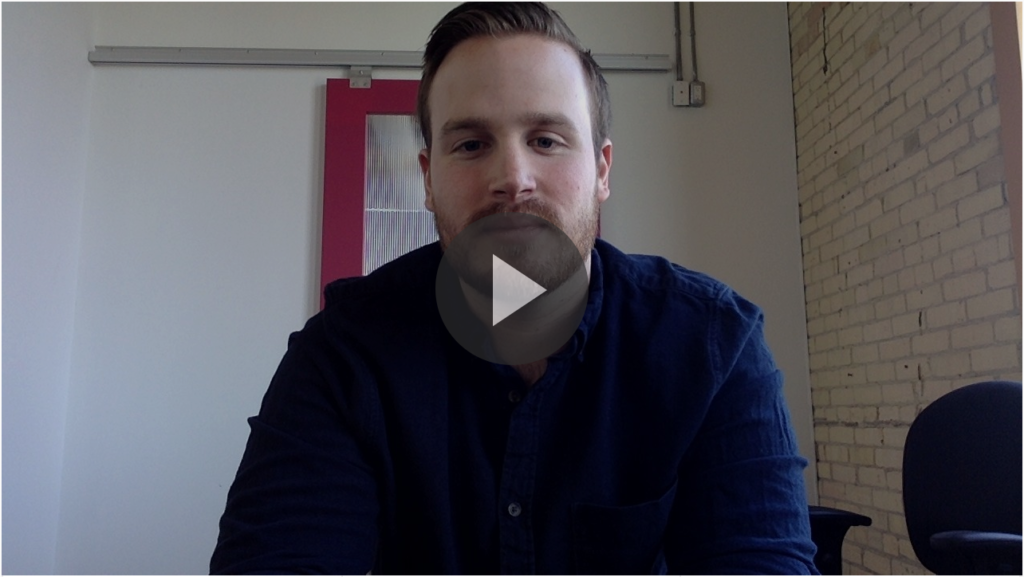
Screen Shot 2017-01-30 at 1.41.39 PM

See how personal video can be?

With ViewedIt, prospects finally felt like they were being seen.

Adam’s sales development team incorporated inside their emails ViewedIt videos that were personalized for each prospect—no longer just for an industry or persona, but specifically for each person, creating an experience more genuine than anything their prospects had seen before.

The results spoke for themselves: “My team came to me constantly with success stories of their ViewedIt video emails. They were working to cut through the noise, and helped us connect with people on a human level.” They kept hearing from their prospects how much they enjoyed the videos. As Adam said, “When a prospect compliments you on your selling technique, you know you’ve got something that works!”

Now, the team could work smarter, not harder.

With ViewedIt, the team could see not only who was watching videos, but when they watched and for how long. With these insights, “We could determine who the most engaged prospects were, so we could focus our efforts on the right people, and create more opportunities in less time!”

Adam, ever looking for new ways to innovate, found more ways to take advantage of ViewedIt’s power, including creating videos to train sales reps on anything from new techniques to changes in their CRM that they need to know about. “I enjoy using ViewedIt. It’s fun. And it’s a great way to demonstrate ideas both internally and externally.” It’s also opened his eyes further to the current state of sales, and what the future might hold: “I’ve realized just how much sales is in flux. We need to keep pushing, changing and innovating to break through the noise, and that’s really exciting to me.”

It’s exciting to Uberflip as well. The successes of Adam’s team have “started to change the idea, at Uberflip and in the sales industry, that sales development teams are only capable of the ‘smile and dial’ approach. There’s a creative and strategic role that SDRs can play, and every success we have helps cement that role.” With rave reviews from prospects and customers, and recognition from leaders and peers, Adam and his team have truly hit it out of the park.

Want to learn more about how other organizations have achieved success with Vidyard? Check out more customer stories.

The post A Story of How Baseball and Video Helped Create a Winning Sales Development Team appeared first on Vidyard.


source http://www.vidyard.com/blog/a-story-of-how-baseball-and-video-helped-create-a-winning-sales-development-team/

Thursday, 26 January 2017

Client-Created Content is Key – Wise Words from Stephanie Totty

Remember taking exams in high school or college? Getting out your scanner cards, filling in the little boxes (number two pencils only!) and piling them all neatly in a box so you can get your marks a week later? Not the most fun process, was it?

Well the kids of today don’t have to go through that rigamarole, thanks to companies like ExamSoft. And Stephanie Totty is in charge of making sure as many students have that privilege as possible.

As the Senior Content Strategy Manager at ExamSoft Worldwide, Totty works tirelessly to generate interest for ExamSoft across their blog, social channels, webinars, and a host of other platforms. “I started mostly as a copywriter and social media person, and just grew from there.” Totty told me in interview, “The focus of my role has morphed into content strategy and creation. Which is great, because I find that a lot more interesting than just creating social posts — this way I get to be hands-on in the process.”

To find out all the marketing secrets Totty has learned in her four years at ExamSoft, we chatted with her over Google Hangout. Here’s what she had to say:

How has content marketing evolved since you started?

I think there’s just a lot more emphasis put on content marketing now. I don’t really feel like a few years ago content marketing was really much of a thing, and now it’s almost a buzzword. Content creation was important, and it was there, but the major focus was elsewhere. Now everyone is starting to take the content creation and strategy process more seriously, and I feel like we’re all in the phase where we’re just churning out content. Which is not necessarily the best strategy to take.

I know I fell into that myself a couple of years ago, and now I’m desperately trying to claw my way out of mounds and masses of blog posts, videos, white papers, and case studies. I’m much more conscientious about what gets created, when, why, and how we can repurpose old pieces of content in new or more effective ways. So I feel like that’s the trend now in Content Marketing is being a lot more strategic about the way the content is created and for what purpose.

What metrics should marketers be paying more attention to in 2017?

Personally, the most important metric for me to be paying attention to is content consumption. What type of content is being consumed, where it is being consumed, who it is being consumed by, and when it is being consumed? I have mounds and mounds of content and it’s all floating around out there, and I want to be much more informed of which parts of that content are actually helping people and that people are interested in

That way I can do two things — first, determine where can I shave off things that are just taking up space and cluttering up my area. And second, for continued content creation. I want to be much more informed about what’s working, what’s not, where to place it, when to place it, and who to push it to. So content consumption in general, and Vidyard is amazing for that as it tells me exactly who is looking at what, where they are looking at it, and for how long. Then we use Uberflip for doing that for all my written content.

What is one content marketing strategy that most companies miss out on?

I feel that client-created content has been a huge part of what has made us so successful in our content creation and content consumption. When I first came on board it was very difficult to get that process started because our clients weren’t used to it. And to be honest, I just hounded people. I called, I knocked on doors, and I wouldn’t take no for an answer, but it’s hard to start that process and have those conversations with your clients.

Saying “Can you help us do this?” and “Would you work on this project even though you have a full-time job and now I’m asking you to do these other things as well?” is sometimes an awkward conversation to have. But four years later I have people knocking on my door — clients I have never heard of — emailing me and saying “Hey I’m doing this thing, and I would love to do a webinar on it. Is that something that is possible?”. And I say “Yes! Absolutely!” I have peers in marketing that say it’s too much work or they don’t know where they would start, ask if we pay them, or what the rules I just tell them that you make the rules up as you go. Do what works for your specific industry and clients. It’s proven invaluable for us.

What’s your favorite campaign that you have been a part of?

We led a Twitter chat last year for those in the educational assessment. We called it #AssessChat, we had an academic lead it, and we gave away tickets to our user conference. It was a great campaign because the whole point of it was to generate buzz around our user conference and get people to show up. But it had the added effect of getting people who were not clients that had never heard of our company and so it was a bit of fuel for the pipeline. Sales got some really great leads out of it, and that was really neat for me because social rarely works in our space. So when it does work, I get really excited about it!

What resources do you turn to in order to get better at your job?

I love the MarketingProfs newsletter! I always feel like their content is really relevant and on-point, and that they’re always on top of relevant topics. I pay attention to what Vidyard and Uberflip post on linked, which puts it right in front of my nose. And I am a part of several B2B marketing groups on LinkedIn, so when I am looking for professional content that’s what I stick to.

Twitter is my jam but its usually flying by during the day when I’m working so I don’t always catch it. I would say whatever type of industry you’re a part of, find some relevant linked groups. I know sometimes they can be spammy but there’s some really good stuff in there was well.

The post Client-Created Content is Key – Wise Words from Stephanie Totty appeared first on Vidyard.


source http://www.vidyard.com/blog/client-created-content-key-wise-words-stephanie-totty/

Wednesday, 25 January 2017

The Sales Tactics You Need to Know for 2017

When you sell, are you making change?

Last week, we hosted some great sales and marketing expert panelists to chat about the top sales tactics and strategies in 2017. This is a recap of that webinar session, so that we can bring you top insights to help you excel in 2017.

Why might you need these insights, you ask? Well, one of the few constants about business is that it’s always changing. Which can be a good thing—it keeps us from getting overly bored, falling into slumps, and losing our drive. But for salespeople, this also means that if you want to keep achieving success, you have to push yourself to stay on the forefront of that evolution.

It’s a challenge, and sometimes it can feel overwhelming. What are the best strategies? Which tactics will get you noticed? Which philosophies are worth considering and which are tried-and-true classics? These three well-known and successful sales leaders helped answer those questions:

  • Jill Rowley, a self-proclaimed “sales professional trapped in a marketer’s body” who focuses on social selling and the blurring lines between sales and marketing;  
  • Craig Rosenberg, Co-founder and Chief Analyst at TOPO Inc., who focuses on advising and consulting for marketing and sales; and
  • Matt Heinz, President of Heinz Marketing, whose focus is on greater sales, revenue growth, product success, and customer loyalty, facilitated the discussion.

What were some of the biggest takeaways from the webinar?

Takeaway #1: The buyer of today has changed, so sales has to evolve how they sell.

When asked what kind of digital transformations and advancements she has seen in the past year, and what she predicts for 2017, Jill Rowley made clear that digital has really changed the game. The buyer today “has a lot more access to information and to her peers”. The marketing world has evolved to meet the needs of the new digital buyer—marketing now has a plethora of technologies to choose from to help them win. But the sales world has been a bit slower to evolve, and needs to catch up: “Digital sales transformation [involves] really understanding the new way that sales professionals need to work”.  

What does this prediction mean to you?

What does Jill mean that today’s buyer has changed and they have more access to information? Well, we now know that these days, up to 90% of the customer’s decision to purchase is complete before they even reach out to your sales team. Consumers now use websites, blogs, whitepapers, customer testimonials, social, and other channels to glean all kinds of information about you and your product, which is vastly different from how people used to learn about products: mostly, salespeople would reach out and engage someone in a conversation. But these days, as Jill points out, the line between marketing and sales has blurred, and companies are now educating their prospects indirectly, before ever having a face-to-face (or email-to-email) conversation.

So they’re more educated right off the bat. And it turns out, one of the biggest ways they’re educating themselves is through video: did you know that 80% of site visitors will watch a video, while only 20% will read content? It’s true. People are looking for video from you because it’s more interesting, entertaining, and engages their brain on scientific levels. As Jill says, video is “edutaining”.

Takeaway #2: The human need for relationships means there will always be a need for a sales team—if sales teams embrace personalized strategies.

When Craig was asked about engagement and advancements for sales teams, Craig focused on the fact that human beings want the human element in our communications. He was quick to say sales teams would never be replaced by robots because of this need. But what that does mean is we have to be selling in a more personal way, so we can engage more deeply: “All of us are trying to get as close as we can to 1:1 relevant human interaction across all our channels…If I’m going to communicate with someone, how is it going to be most relevant to them? How can I make sure they get it?” His answer: “It’s gotta be personal…The ones that are making it work are trying to figure out how to personalize and customize the majority of those interactions and do it at scale.”

What does this prediction mean to you?

We’re all inundated all the time with brand messages and content and emails…this overwhelming, busy world could be contributing to the fact that now, our attention spans are only 8 seconds long. So we don’t have time for messages that don’t speak to us on a personal level.

While the marketing world has been taking a shine to personalized video and seeing incredible results from it (like a 500% lift in email conversions), sales has been a bit slower to adapt personalized technologies. Think about all the emails you may send and receive—templated, awkward, and a lot of the time, they end up in the trash. Video, however, is the more personal, human medium—we’re seeing, hearing, experiencing, and relating to what we are watching!

What can you do to achieve greater success as a salesperson in 2017?

Now that we know what some of the best and brightest sales leaders are predicting and urging for 2017, how can you put these sales tactics into action?

As a salesperson, just because your audience is a lot more educated than they used to be doesn’t mean that you don’t have to try anymore because your leads are already doing all the legwork themselves. In fact, it means you need to try harder to get their attention and stand out amongst everything else they’re watching and reading and learning about.

As Craig said during the panel discussion, 90% of marketing and sales professionals claim that their biggest issue is engagement. How can they stand out, get noticed, and really engage with audiences on a personal level these days?

The fact that audiences find video the most engaging medium speaks volumes. In fact, prospects who view videos of a product are 85% more likely to buy. Sales teams can use this medium to their advantage with a video platform that provides analytics on which videos each lead is watching, and how deeply they’re engaged. So even before your first contact with the lead, you know a fair bit about them and their interests, helping you to better tailor your conversation, and close deals more quickly and easily.

But sales teams don’t need to rely solely on marketing-made videos. Now, with video recording tools like ViewedIt, sales has the power of video in their own hands. And best of all, sales can make personalized videos!

Imagine sending a prospect an email that includes a video that you recorded just for them. When they see “Video” in the subject line in their email inbox, they’ll be more likely to open your email (8x more likely, in fact!). And then, when they click on the thumbnail image for the video (which you smartly personalized by writing their name on a piece of paper or small whiteboard), they can watch your video as it opens in a browser window. Now, you’ve stood out inside their mailbox, and gotten noticed by speaking to them on a 1:1 level. Because of this, they’re more likely to watch and engage with you. And, because you created that email with them in mind, and personalized it with their name, that video will have significantly increased your chances of closing the deal: in one company, 75% of late-stage prospects that receive a personalized video become a customer!

Standing out with video is just the beginning. You can even get notifications on when your videos are viewed, so you can follow up in the best moment, when you know they’re engaged with your content. Doesn’t that make the conversation so much more personal? Instead of hounding your leads, instead, you’re taking cues from their own interests and actions, and giving them exactly what they’re looking for when they’re looking for it. Now that’s an engaging, personalized experience!

With tech tools and strategies like this, you’ll not only be evolving to give audiences what they expect, but you’ll be surpassing expectations, helping you to not only keep up with change, but lead change for your team and your organization. Welcome to a successful 2017!

If you want to learn more from these sales experts about what they predict and advise for selling in 2017, check out the on-demand webinar now.

Blog CTA@1x (1)

The post The Sales Tactics You Need to Know for 2017 appeared first on Vidyard.


source http://www.vidyard.com/blog/sales-tactics-need-know-2017/

Tuesday, 24 January 2017

First Video in Business Benchmark Report: How B2B Companies are REALLY Using Video

It’s no secret that marketers are investing more in online video than ever before. From creative video marketing campaigns to explainers, video ads, webinars, video blogs, customer stories and more, video is now a critical asset within the modern marketing toolkit. In fact, the average B2B company within Vidyard’s client base has nearly 300 videos in their library and that number will double within the next 16 months. The largest B2B clients host more than 10,000 videos with no signs of slowing down.

So how, exactly, are B2B companies investing in video and how does that differ from their B2C counterparts? How many videos are they publishing each month and what trends stand out for different industries and company sizes? To help answer these questions and many more, Vidyard has released its 2017 Video in Business Benchmark Report offering unique insights and trend analysis data from across its global customer base.

The new report analyzes live video marketing data from more than 500 B2B businesses, 60 million video streams and nearly 250,000 video assets offering a first-of-its-kind look at industry benchmarks for top performing video marketing programs. While some results help to validate common market assumptions, others are quite interesting and may surprise even the most experienced video pundits.

Here is a glimpse at some of the key findings from the 2017 Video in Business Benchmark Report published by Vidyard:

  • B2B businesses have published 293 videos on average and will double the size of their video libraries within 16 months (Tweet this stat!)
  • Businesses in High Tech and Manufacturing were the most frequent publishers in 2016 averaging more than 20 videos per month (Tweet this stat!)
  • The average video length in B2B is 8 minutes, though 56% of videos published in 2016 were less than 2 minutes (Tweet this stat!)
  • Videos under 90 seconds retain 53% of viewers on average; those over 30 minutes retain only 10% of viewers (Tweet this stat!)
  • 85% of businesses now have internal resources for producing video content to help them meet the growing demand for content (Tweet this stat!)
  • 86% of views of business-related videos take place on desktop browsers; only 14% take place on mobile (Tweet this stat!)
  • Businesses producing 50+ videos per year are far more likely to use advanced video analytics and to be increasing video budgets (Tweet this stat!)
  • Wednesday is not only hump day, it’s also the busiest day of the week for B2B video viewing (Tweet this stat!)

To check out the full report or to see how your business stacks up to industry benchmarks, simply download a complimentary version of the 2017 Video in Business Benchmark Report here! If you’re interested in quoting any portion of the report online or learning more about our research methodology, please contact us at press@vidyard.com.

We would love your feedback on the benchmark report and any comments you have on which insights you’ve found most interesting or useful. Drop us a comment below to let us know what you think!

video business benchmarks

The post First Video in Business Benchmark Report: How B2B Companies are REALLY Using Video appeared first on Vidyard.


source http://www.vidyard.com/blog/video-in-business-benchmarks/

Monday, 23 January 2017

Meet the Vidyard Team, Video Style: Thomas Karthaus

Meet the Team is our monthly chance to introduce you to the fabulous, quirky, talented people who work at Vidyard, using our favorite medium — video! For this episode, we caught up with Thomas Karthaus, Video Specialist here at Vidyard. Discover who the most influential person is in Thomas’ professional life, and the funniest thing his dog has ever done in this video:

What didn’t make the cut

Tom had lots more to share than just his love of baseball, so here’s a few more of his answers:

What brought you to Vidyard?

One of my really good friends from the business world took a job at Vidyard. I learned very quickly how amazing the organization is and how innovative the technology is, so I knew that I had to be a part of something special. And now I am!

What’s your favorite video on the internet right now?

It has to be the new Sick Kids Hospital video. The one about how sick isn’t weak:

The reason why this video is so important, and means so much to me, is that hospital saved my sisters life. Over 20 years ago she was a patient, and experienced everything the staff show in this video. What you see in this commercial is the environment they create for their patients. When you’re at that hospital, you don’t feel like you’re sick. You feel that you’re powerful. And that you can overcome what ails you. That place is truly special, full of amazing people, and the video really captures what Sick Kids is all about.

What’s your favorite place to eat in Orangeville, and why?

My favorite place to eat in Orangeville is… well, it’s Orangeville so selections are kind of limited. But there’s one phenomenal restaurant that my wife and I love to go to. It’s called Rustik. It’s independently owned, and all the food is locally sourced. It’s incredible — I highly recommend the tuna tataki salad as an appetizer, and the duck breast as an entree. You can’t go wrong!

Now let’s look at funny pictures of Jackson!

jackson-table

jackson-couch

Jackson Puppy #2

The post Meet the Vidyard Team, Video Style: Thomas Karthaus appeared first on Vidyard.


source http://www.vidyard.com/blog/meet-vidyard-team-video-style-thomas-karthaus/

How to Read More Books: A Plan Anyone Can Use

The first book I remember reading was in the summer of 2001.

SAMSUNG CAMERA PICTURES

I was 20 years old, and up until that point in my life I’d felt no interest in reading.

You see, I come from a stereotypical West Virginia family, complete with a coal-miner dad and a stay-at-home mom. Apart from a few fleeting moments of academic interests, reading and education weren’t a personal interest and weren’t emphasized at home. Playing sports and having a good time with friends were all that mattered.

But things changed for me that summer. In two really big ways.

I had just met a girl (who is now my wife), and she liked to read. After our first conversation, I felt intimidated. She was intelligent, witty, and always kept up with current events. As for me, I was the proverbial meathead in college. I was playing football, and anything that whiffed of academics repulsed me.

Well, I wanted to see her again but knew I needed something intelligent to talk about the next time I saw her. So, I visited a Waldenbooks store over the weekend, browsed the aisles, and bought a copy of The Art of War by Sun Tzu.

I can’t recall why I picked up this specific book. But knowing who I was back then, I would wager it had something to do with the word war in the title.

After getting home, I sat down and read the book. While I found the writing archaic, clunky, and difficult to understand, my interest in impressing this new girl drove me to read the entire book.

I can’t say our second dinner date at Chili’s in Charleston, WV paved the way for our marriage or that my love for books radically changed after reading The Art of War. But over the next few years, my wife and I did get married and I slowly realized something else… I was reading a lot.

Confessions of a bibliophile

Today, I’m a bibliophile.

My house is filled with books. Books sit on top of my desk. Books are stacked beside my desk. Books sit on top of my nightstand. We have multiple bookcases around the house, and we have storage containers full of books.

I read constantly, listen to numerous audiobooks, and read out loud to our kids. I even work in the publishing industry. Needless to say, my life revolves around books.

Over the past few years, I’ve been able to read over 100 books per year. This includes books I read for work, books I read or listen to for myself, and chapter books I read to our kids.

Now, I don’t have a ton of spare time. I’m married, have five kids, two cats and one dog, work full-time, and my family and I are involved with a church. But, I love reading, so I’ve committed to being purposeful with my time—I follow a reading plan.

You see, our time is limited. There are millions of books in circulation and thousands more being published weekly. It’s impossible to read everything that has been or will be written. So, we have to choose wisely.

If you want to read more books, then hear me loud and clear: You can.

Below is the process I’ve been using the past several years to develop my personal reading plan. For full disclosure, there are times I follow this reading plan religiously and there are other times when I forget it even exists.

But it’s helped me read more books. If you’d like to do the same, then I encourage you to not only follow these five steps, but to carve out a small part of your day to develop your reading plan.

Before moving forward, I encourage you to download this free reading log to help you get the full benefit out of this process.

Step #1: Clarify your reading goal

Why do you want to read more books?

Do you want to learn a new skill? Are you conducting research for a new book or project? Are you interested in reading a captivating story?

There are many reasons why you should read more books. But for the sake of making your reading plan, it’s important to clarify your reading goals before moving forward. This will not only help you build your personal reading plan, but it will help you push through, change your habits, and read more books when you feel like quitting.

For me, I read books to help me professionally; gain new insights as a husband, parent, and friend; learn about history, current events, and influential people; explore personal interests; and, seek entertainment.

Action step: Identify 1-5 reasons why you want to read more books.

Step #2: Make time to read

Reflect upon your weekly rhythms. Now, where can you fit in additional time to read?

Like anything in life, if you want to start something new and accomplish a goal, then you’ll most likely have to cut back on something else. If you’re currently not reading as many books as you like, then you’ll have to reprioritize your schedule to make it happen.

When it comes to reading more, don’t assume you can simply add a new to-do to your daily schedule and get it done. Trust me. It won’t happen.

Listen to your life. Look for ways you can make the time to read. Whether it’s taking a book with you to run errands, turning the T.V. off at night, or reading classic books with your kids, identify ways you can naturally incorporate reading into your life.

For some of you, you might be able to read one book per month. For others, you might be able to read one book per week. Regardless of your situation, it’s best to set a realistic goal for yourself.

For example, if you haven’t read a book in a while, then it’s probably not best to plan on reading 100 books this year. Instead, make a plan for how many books you will read in the next three months. This way you can get a better idea of what you’re capable of doing. I would rather see you set up to succeed than crash and burn in a fire of disappointment.

Action step: Determine how many books you want to read in the next quarter or year. Now, make time in your schedule to accomplish your reading goal. 

Step #3: Pick categories or genres

I know you already have some books in mind you want to read. But before you finalize your choices, it’s best to think through the types of books you want to read in broad categories.

Identifying these categories will help you select specific books to fulfill your goals and ensure you maintain a well-balanced reading diet.

At the moment, I have six categories I read through:

  • Business
  • History
  • Theology
  • Culture
  • Children’s
  • Fiction

I decided on these categories based on the goals I identified above. For example, for the business category, I’ll regularly read books on marketing, publishing, and entrepreneurship. With this category, I’m constantly reading books that help sharpen me professionally.

The children’s category contains the books I read out loud to our kids. This includes some fun books and short titles, but mostly it involves classic books.

The other categories I’ve identified, such as history, theology, and culture, are areas of personal interest. Now, for fiction, I’m not necessarily a huge fan of the genre, but reading in this category helps stretch me as a reader and learn storytelling from some of the best writers.

When it comes to identifying the categories you want to read, think through what will help you accomplish the goals you identified above. What types of books will most influence your life, work, hobbies, and aspirations?

If you need help with parenting, plan on reading a few parenting books. If you’re looking for new business ideas, pick up some titles on entrepreneurship. If you’re planning on starting a garden this year, then read a few books to help you get started.

Here is a short list of different genres for you to consider:

  • Religion
  • Mystery
  • Business
  • Travel
  • History
  • Science
  • Comics
  • Biographies
  • Fantasy
  • Children’s
  • Literature

Now, categorizing your reading isn’t necessary in every season of your life. There were times in my past when I had to focus on only 1-2 categories because I was trying to learn a new skill or conduct research for a new project, like writing a book.

Action step: Pick three or more categories or genres that will help you reach your goal or 1-2 categories to help you learn a new skill or conduct research. 

Step #4: Choose your titles

Here comes the fun part.

You have a reading goal. You made a plan. You know what categories you’re going to read. Now you get to pick the individual books you’re going to read.

Don’t get bogged down choosing books. The main thing is to identify enough books to read for the next 2-3 months to help you fulfill your reading goal.

If you’re having a hard time figuring out what you want to read, then pick up a book you’ve previously read (and liked) and see what the author referenced in the footnotes or index. This is a great way to discover new books.

You can also ask your friends, scan the best-sellers lists or Goodreads, read old books, explore similar titles of your favorite books, and more.

Now, these book choices are not set in stone. Feel free to rearrange the individual titles you want to read. Your goal with this step is to identify what books you’re going to read.

So, if you received a great recommendation or feel you can’t handle one more business book, then take a break. Read something else.

Action step: Make a list of 3-5 books you want to read for every category you chose. 

Step #5: Complete your reading calendar 

This is the final step.

Use the reading log to add the categories, book titles, and authors you want to read this month. Keep up this process until you complete as many months as you’re able.

The key is to not necessarily fill out the entire calendar. The goal is to know what you’re reading this month and next so that you can prepare to have what you need to read. This way you’re not waiting around gathering what you want to read when you can be reading.

My calendar is currently filled out for the next three months, and I have a laundry list of books identified that I want to read. But my list regularly changes.

Reading is a fluid activity. If you’re not enjoying a book or you already grasped what the author is trying to say in the first 50 pages, then feel free to abandon it. There’s no reason to plod through a book if you don’t want to or have to.

Your turn

If you want to read more books, what’s holding you back? Is it purpose? Time? Something else?

P.S. Don’t forget to download the reading log to help you develop your reading plan.

The post How to Read More Books: A Plan Anyone Can Use appeared first on The Copybot.


source http://feedproxy.google.com/~r/thecopybot/feed/~3/Nexc_fmej-s/

Thursday, 19 January 2017

The Story of a Storyteller Who Became a Vidyard Customer

Have you met someone recently where you thought, “Wow, you’re inspiring! How did you do that? What could I do with if I had your knowledge or passion or skills?” Well I have. And I didn’t have to go far to find her, because her company is a Vidyard customer.

Stephanie Totty works at ExamSoft. The software company creates assessment software for educators and students. Now, exams might dredge up feelings of anxiety and memories of cramming too hard too fast, and drooling on the pages of your textbooks (please tell me I’m not the only one!). But ExamSoft is dedicated to creating a better experience for educators and for their students. Like at TSTC School of Nursing, where the software helped educators connect with students who needed additional help and remediation, bringing their board exam pass rates from a 77% to a 100% within a year. And at Touro College of Medicine New York, where ExamSoft data helped improve student performance and decrease student dropout, saving the school over $2 million in tuition.  

Wowzers.

It’s clear ExamSoft, and Stephanie, were doing amazing things. How do they do it? It turns out, Vidyard has played a big role: Through video, they reach more and more people through the powerful medium, since it’s more engaging than other formats like text. Using Vidyard, they are learning exactly what content their audience is truly interested in, and are having great success delivering the right messages to the right people.

But only a few years ago, video wasn’t even on ExamSoft’s radar.

ExamSoft had no video content to speak of, and no plans to change that. So what happened? Why did ExamSoft make the leap into video with Vidyard? And who was brave enough to strap on ExamSoft’s figurative running shoes, stretch calf muscles, take the risk and clear the hurdle?

Can you guess? Stephanie Totty, Senior Content Strategy Manager at ExamSoft. I was lucky to sit down and chat with her about how she does it all, what drives her success, and why she loves ExamSoft and what she does.

Screen Shot 2017-01-16 at 6.10.24 PM

Stephanie Totty, Senior Content Strategy Manager at ExamSoft

J.K. Rowling should probably never come over for dinner.

I quickly discovered that Stephanie and I shared a passion: storytelling. Stephanie told me she’s always considered herself a storyteller. As a child, she loved learning and writing, and as she grew, Stephanie found inspiration from some of the greatest stories and storytellers, including Star Wars, Tolkien and his epic Lord of the Rings, and Harry Potter, created by J.K. Rowling (who, if Stephanie could host a fantasy dinner party, would be the guest of choice. “I would serve 15 courses just to keep her at my table longer!” Stephanie says unrepentantly during our chat. I could only agree: I would follow suit and maybe even lock my doors.).

Writing and storytelling was never just a pastime or hobby. It helped Stephanie shape her career as a content marketer: “One of the things that struck me about J.K. Rowling is she would drop what seemed like minor details into the first Harry Potter books, and by the time you got to the seventh book, those minor details actually showed themselves to be the basis for the whole story!” It was a vital lesson to a content marketer: “You can’t just put any words down on paper or a screen. You have to put effort into crafting your story and determining what the real point of it is.”

Storytelling is a way to share a powerful message, but you have to know what the right message is. Audiences are different, and good marketers know that the story that works for one person may not work to convince someone else. ExamSoft software means a lot of different things to different users, and Stephanie knows that “one story may go completely over someone’s head or not be applicable to their wants and needs. Content marketers must make sure that they’re NOT telling the story they want to tell.” Sound a bit crazy? She clarifies: “Instead, they need to be telling the story—or stories!—that resonate with whatever audience is currently consuming the content.”

So how can you know what the right story is?

But how could Stephanie and the ExamSoft marketing team know for sure what the right stories were? How could they create a human connection and build relationships with audiences?

Stephanie realized that video could help. As an online video consumer herself and voracious self-learner, Stephanie knew video was a new and powerful marketing trend that could have lasting impact. That’s why she took a closer look at Vidyard, despite not having a video strategy, when the video platform was presented as a good fit for her business.

Vidyard offered analytics that ExamSoft hadn’t known were possible, like who was watching which videos, how long they were staying engaged, and what kind of content was performing the best. If Stephanie could get her hands on insights like that, she could make sure ExamSoft was delivering the content their audience wanted and needed. On top of that: “The Vidyard salesperson we worked with at the time was very hard to say no to. He was enjoyable and kept going the extra distance to make us happy, which is something we try to do ourselves for ExamSoft customers. It felt like Vidyard and ExamSoft valued the same things: building strong relationships, and sharing the right stories with the right people.”

So Stephanie discussed Vidyard with her VP of Marketing, who agreed that the analytics Vidyard could offer, as well as the deep integration with the marketing automation platform and CRM that they were already using, could only help them understand their leads even better.

Video can teach lessons, if you’re willing to learn.

Embracing video felt a bit overwhelming at first—where should they start? How many resources and how much time would it take? But the whole ExamSoft marketing team jumped in, spending much of 2016 focusing on creating video content for every discipline, persona, and pain point—in fact, in 2016 alone, the team created over 200 videos! And when Vidyard’s analytics told them some content wasn’t resonating with their audiences, they tried again. Getting insights on how they could improve really spoke to Stephanie, because again, it seemed Vidyard was in line with ExamSoft’s own value proposition: ExamSoft is dedicated to helping people learn and grow. The exam software itself “gives in-depth analytics to students on their performance, helping them learn what they did and didn’t do well in, and what they can focus on to improve.”

What Stephanie and the ExamSoft marketing team learned from Vidyard was immensely valuable: “We didn’t need to go super-fancy to have major impact.” They created a lot of webinar content, and focused a lot on customer testimonials as well, because this content continued to shine. As these insights from Vidyard showed them, “academics want to hear from academics”. These content types became “low cost/high reward” assets for ExamSoft and their audiences.

One of the most interesting things they learned? “We believed ExamSoft’s software analytics were the strongest part of our story, so we had been focusing on that. But Vidyard data indicated that our audiences also really wanted to hear about our security features, and to date, our second strongest performing video is on ExamSoft’s security!” (The video is outranked only by their general demo video.) You can check out the video yourself:

There’s nothing better than earning your success.

But it’s not about finding out which topic you should or shouldn’t focus on. There was a bigger message, one to be inspired by. Stephanie’s passion for storytelling and drive to keep learning will help her and her company achieve greater success: “Even when you think you know something, there’s still so much you can learn. You can still rewrite your story and become a better, stronger storyteller and marketer.” We can imagine even J.K. Rowling would be proud….

The whole ExamSoft marketing team is behind her. 2017 at ExamSoft has been declared the year to create the right content for the right people. I can’t wait to see what they create next! Have you been inspired by Stephanie and what ExamSoft has achieved? How are you using video to strengthen your own stories and connect with your audiences?

Want to learn more about other organizations’ success with Vidyard? Check out more Customer Success stories.

The post The Story of a Storyteller Who Became a Vidyard Customer appeared first on Vidyard.


source http://www.vidyard.com/blog/story-storyteller-became-vidyard-customer/