Tuesday, 13 December 2016

Tailor Content to Buyer Personas with Choose Your Own Adventure Videos

Marketing to anyone is a challenge – but what if one of your key buyer personas is… marketers? The odds are stacked against you. We, as marketers, have seen it all, and we don’t fall for gimmicks. That’s how Linda West, Act-On’s Director of Digital Marketing opened her talk at Viewtopia 2016. And she’s right.

Act-On is a Marketing Automation Platform, and as West puts it, their biggest challenge is standing out from the crowd. “All of us are publishers. Everyone in this room, every business out there today is a publisher of content. So how do we actually stand out, especially in our industry – martech – where companies are really good at this?

The answer, it turns out, was a content type they were already using – video! But they had to take it further, and make it a whole lot more personal. To find out how West and her team made that happen, check out these 3 big takeaways from her talk at Viewtopia:

Videos Shouldn’t Be Passive Assets

Video is one of Act-On’s most popular assets – and turning those videos into lead generation tools was a big win for West and her team. “Our video hub is the primary source for our lead generation, so we have a ton of our videos available to watch in one single, branded place. We have a mix of videos that are gated and ungated, and we see a lot of great activity of people going to this page without a direct link.”

Finding the right blend of gated and ungated content was a challenge though, as was figuring out where the gates should go on content that was worth asking for contact info. “It’s incredibly simple in terms of the mechanism, but in terms of how, why, and where you gate a video? That’s a different question entirely. This is something we have played around with quite a bit, and we’ve tried three distinct gating strategies to figure out when is the right time to gate a video, and how should that gate work.”

West and her team experimented with having the gate appear:

  1. right after the viewer clicks play before they’ve consumed any of the content,
  2. three minutes into the video, and
  3. after the video has played.

The results surprised them – and surprised the audience, who firmly believed that gating a video three minutes into watching would generate the most high-quality leads.

“Strategy number one ended up being the winner – almost double the leads, and that translated into more revenue,” West told the audience, “But it’s different for every single audience, and every single use case for generating leads with video. The point is it’s really easy to implement these types of tests, and look at the different dimensions. So if you are already doing video gating and video lead generation, try looking at different ways of gating and see what works for you!”

Everyone Loves to Choose Their Own Adventure

Remember those “Choose Your Own Adventure” novels from when you were a kid? Each page had a series of outcomes, and you would choose a different page to jump to and create the story in your own pathway. Those books were wildly popular — and with good reason. “We feel a sense of ownership over the story. We feel a sense of ownership over the content because we, as humans, place more value in things that we place a sense of ownership over,” West said, “And applying this same methodology with video does a few cool things for you.”

How West and her team used buyer personas and customized content to give prospects a unique opportunity to self-identify was one of the really exciting portions of her talk, so I’ll let her tell it directly:

If you’re looking for a new video strategy in the new year, this “Choose Your Own Adventure” style campaign is something everyone can learn from. We all have buyer personas that want something different from our product. All Act-On did was create specific content for their personas, and offer them the option to self-identify. Taulia did something similar with their P2P Super Heroes series.

Want to learn a few more tips for creating targeted video content for your buyer personas? Check out this post on customizing a single video for multiple audiences.

Take What Works and Scale It

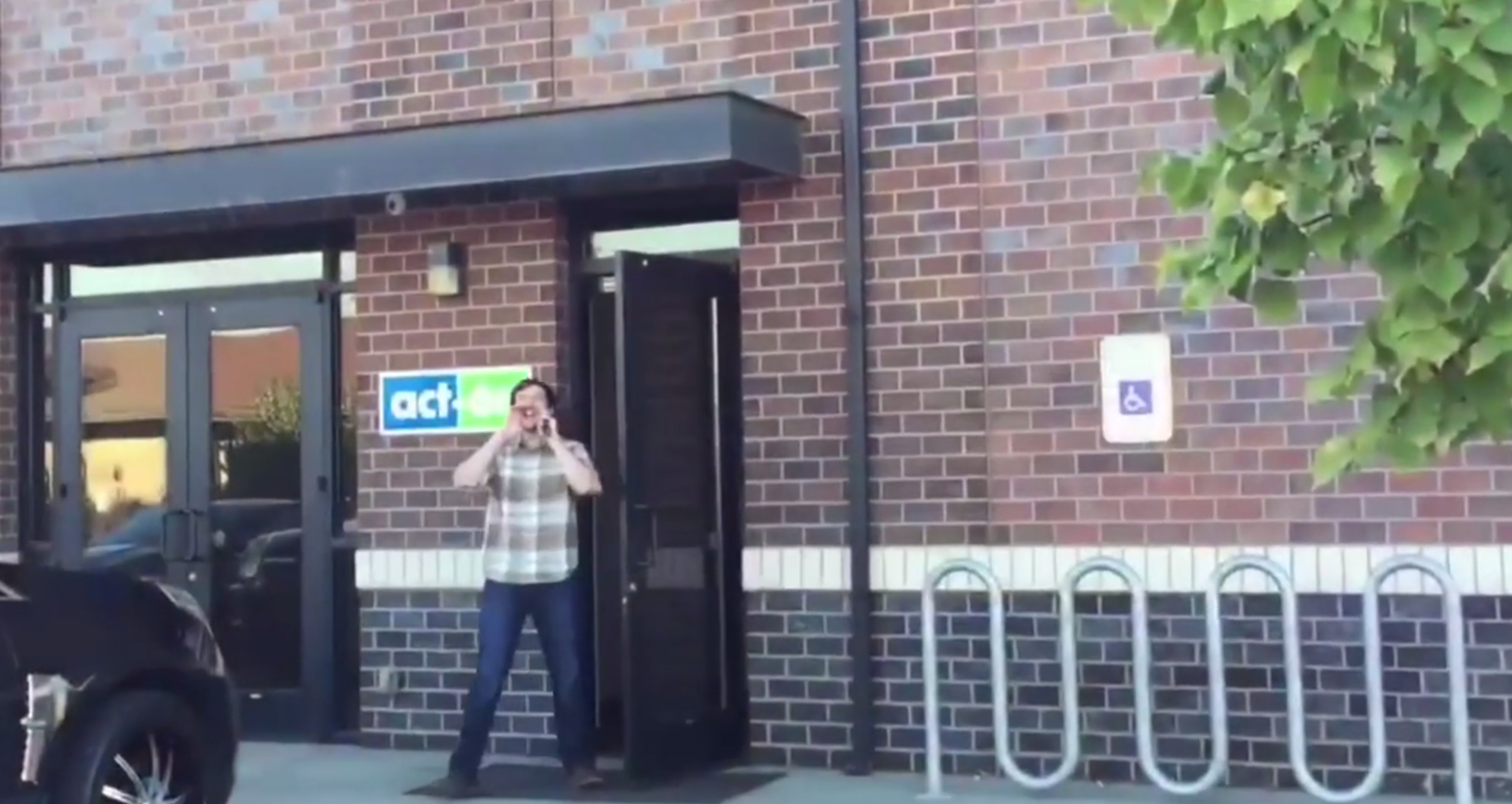
One of the other great strategies that West talked about didn’t start as an ambitious marketing campaign. One of the salespeople at Act-On was having trouble getting ahold of a lead that had gone cold, so he got creative, and put together a video using his phone, and the help of a few coworkers.
act-on personal video screen 1

As West put it, “It was super cheesy, but it worked! The person responded right away. And this was an interesting way to prove to ourselves that video doesn’t need to be super high quality, that it can be personal, and that it can make a difference in the pipeline.” Her team looked at this success as an opportunity, and produced a more polished version that they could personalize on a whim, and use to revive dead leads.
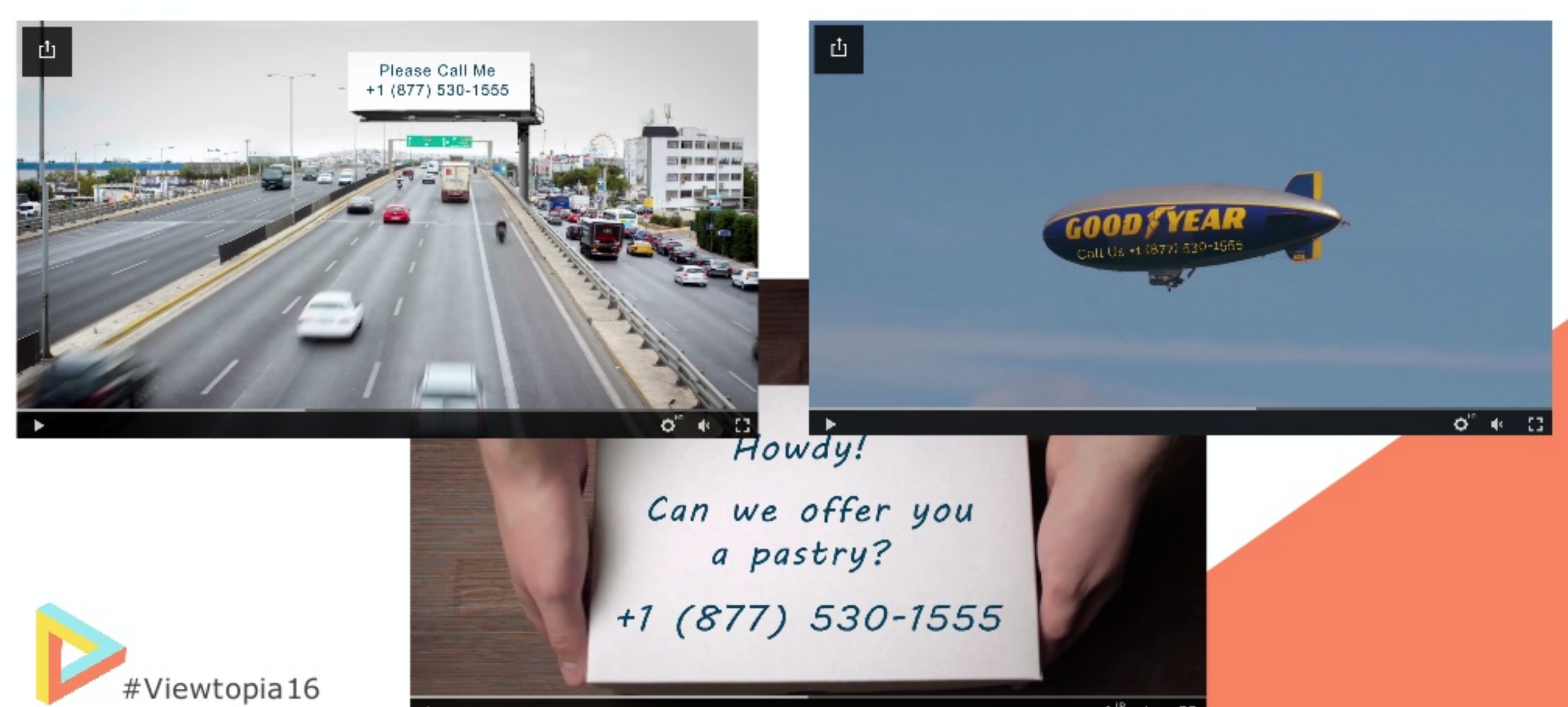
act-on personal video screen 2

“It has everything from billboards to names on blimps,” West shared with the audience, “The video generated over 100 appointments from an unengaged audience, so we took it one step further.” What started as a random video from a single salesperson is now a personalized video ad that they serve to a wide audience of cold prospects.

And the results have been surprising. “We worked in conjunction with ListenLoop and Vidyard and we have a 4% click through rate on this ad, which is ridiculous when the industry average is 0.2%. We’re really excited about this and we’re thinking of all different ways to use this in different contexts.”

Speaking Of Results…

In their first year, West admits that Act-On only had a handful of videos. “A couple of random ones on YouTube,” to be exact. But in the past year, after seeing success after success, the Act-On team has been pressing record more than ever.

“Our on-demand video is now the most clicked-on, and highest converting asset across our entire site. We get more than 100 leads per week, and our sales team loves it,” West said as she wrapped up her talk, “We call it our first million-dollar video because we have had over one million dollars in attributable revenue, and that repeats itself every four months.”

West added that her team has also seen visitor-to-lead conversions increase by 104%, and that videos have generated 21,000 leads and over $27 million in pipeline. Not too shabby for a year of video marketing, and encouraging salespeople to use video in nontraditional ways.

Interested in seeing her entire talk? You can view Linda’s session, 5 Creative Ways to use Personal and Interactive Video to Get the Attention We Deserve and all of the other keynotes, panels, and workshops from Viewtopia on the video hub!
blog-cta-1

The post Tailor Content to Buyer Personas with Choose Your Own Adventure Videos appeared first on Vidyard.


source http://www.vidyard.com/blog/tailor-content-buyer-personas-choose-adventure-videos/

Friday, 9 December 2016

When Retailers Wreck Relationships Because Of Pricing Errors

CyberMonday is becoming one of the most critical days for retailers today. According to IBM, Cyber Monday retailers saw online sales increase by 16.7 percent over last year. Retailers are using email and social offers to get the attention of their customers. In fact, according to IBM’s research:

On Cyber Monday alone, IBM clients sent nearly 500M email notifications to consumers around the world – a one-day record high. Mobile push outreach continued its rapid growth and was up 47 percent over 2015.

It was no grand surprise when I received an email from BaseballExpress.com with their CyberMonday deals. What was a surprise was that they offered a Wilson baseball glove deal for $19.88. They claimed it as a $140 savings. Meanwhile, when someone clicked through to the website the price was over $200. What looked like a great attention grabbing deal turned out to be a click bait and switch. Looks like someone made a mistake and didn’t check the image when they sent out their email. You can see the image below.

These kind of printing mistakes happen. I think we all understand that. A similar thing happened to Macy’s when they priced a $1500 necklace for $47. But, a brand is built on relationships and how you handle mistakes is vital.

I emailed BaseballExpress at around 7:30am.  I told them about the pricing discrepancy and asked them how they were going to handle it. It wasn’t until after 4:30pm that I received a reply from them:

How would you feel at this point? Would you feel that they used false advertising to get you to click through to the website? Is there something they could have done at this point to at least make you feel better about their brand, especially after they admitted they made a mistake?

At this point, I re-checked their email and they had swapped out the original image with the corrected price. There was no second email apologizing for their mistake.

Continue to read on LinkedIn to find out the rest of the story and how they could have handled it.

A couple of keynotes you may want to watch

Jeffrey keynoted the Conversion Hotel event in Amsterdam and spoke about Conversion Rate Optimization Maturity.

I keynoted ConversionJam in Stockholm and presented the 4 Pillars of Amazon Success.


The post When Retailers Wreck Relationships Because Of Pricing Errors appeared first on Bryan & Jeffrey Eisenberg.


source http://feedproxy.google.com/~r/BryanEisenberg/~3/ivEv2Hl3a9Q/

Thursday, 8 December 2016

Emotional Marketing: How to Supercharge Your Results

If you’re a marketer who’s done any dabbling in video, you likely already know all about how important emotion is in your video marketing. Throw in some awww-worthy puppies or use some slapstick Three Stooges humor and you’ve got it made. If you can get your viewers laughing or crying, you’ve probably hit the jackpot, right?

Turns out, emotional marketing is a little more complicated. But don’t sweat – at Viewtopia, the world’s best video marketing summit, Chris Harmon of boutique consultancy firm theBATstudio gave a great talk on what’s really involved in emotional marketing, and how to take it to the next level to develop a real and lasting connection with your audience.

So what’s really involved? Even if you couldn’t be at Viewtopia in person, we’ve got you covered with exactly what you need to know! Here are 6 key points from Chris’s talk:

1. Empathy can have a significant impact on the success of video marketing

Marketers know that emotion in marketing is key. But it goes deeper than that; you don’t just want to settle for any old emotion. You need to create empathy! Empathy, as Chris puts it, lets your audience know that you understand who they are, and you feel their emotions and connect with them. Essentially, you understand and share your potential customers’ feelings.

Video is the perfect medium to express empathy – you can display emotion so much easier than in other formats, and elicit it in your audience. When they see what you’re feeling, they’re likely to feel the same. It’s science.

If you can go beyond just trying to make someone laugh to discovering their emotions, and then empathizing with them through your video, you’re more likely to hold your audience’s attention, speak to their needs and desires, and get better results. It’s a must that you get your company (and your execs) on board with moving beyond talking about “speeds and feeds”, as Chris says, and stop jabbering about your product to instead focus on how you will solve your audience’s problem. You need to show them that you can either alleviate their pain, or increase their sex appeal (a.k.a. give them something they really want). If you want to learn more about the secrets to emotional marketing videos, check out this post!

2. Learn to understand and empathize with your customer through their mindset

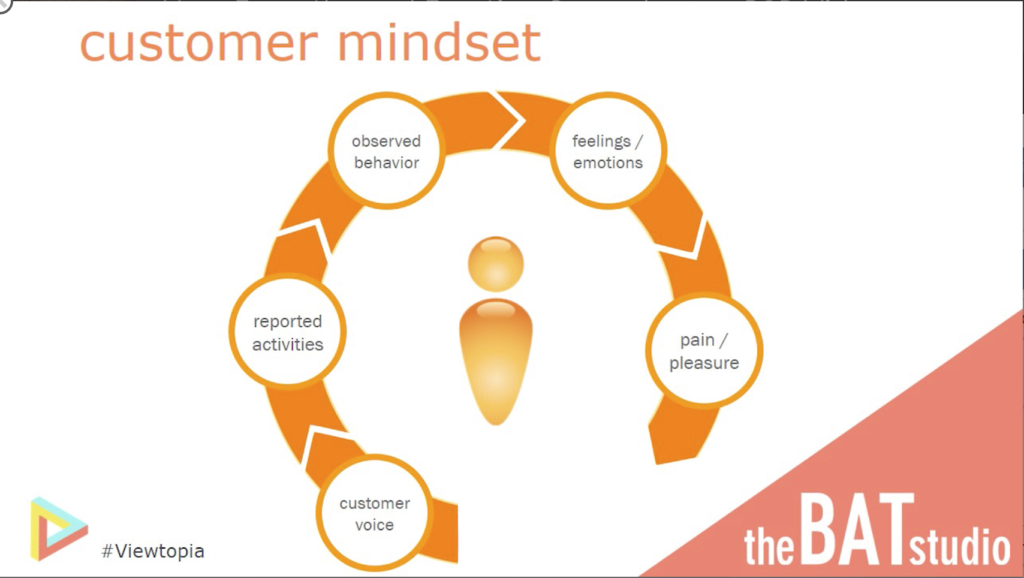
To create empathy in our videos, first we have to understand how our employees are feeling. Chris talks about the five steps that help you get to the bottom of it all:

screen-shot-2016-11-30-at-12-26-02-pm

  • Customer voice – The customer voice is what a business “thinks” its customers believe. Many companies start – and stop – here when trying to understand and relate to their customers. It’s not fully effective because perception does not always equal reality.
  • Reported activities – Through interactions with you, (also considered reported activities), your customers are telling you to some degree what they feel about you. (e.g. If they visit your website and bounce quickly, they’re telling you about their lack of interest and engagement with you.)
  • Observed behavior – You can get a better, more honest impression of what your customers truly feel if you go where your customers are and watch them.
  • Feelings and emotions – What are the emotions people are going through as they engage in behaviors with you? (e.g. looking at your website). Try to engage with them based on what they would be feeling during different actions.
  • Pain/Pleasure – Remember that people think in terms of how they can avoid pain, and how they can gain pleasure. If you can tune your message so it answers those questions and provides the feelings your customers are looking for, they’ll have a stronger connection with you.


3. Demonstrate empathy through your content

When you know what your potential customers are feeling (and what they want to feel), you don’t need to force product-heavy messages onto your audience. When theBATstudio worked to create videos for Oracle Eloqua, they didn’t just create a bunch of product videos from their point of view.

Instead, they had Eloqua customers do the talking. Why? Because they felt the same things, went through the same struggles, and wanted to feel the same emotions and achieve similar things that potential customers do. That meant that potential customers could empathize with the customers and the customer-centric storytelling much better than they would relate to any brand-constructed message. These customer stories, which are still available on their website, achieve a great level of success because the key is to create a message that isn’t about you, but rather what you do for others.

4. Create an ongoing narrative

You can try to create a funny video over here for this campaign, and a tear-jerker over there for that landing page. But you know what’s a better idea? Creating an ongoing narrative that brings your viewers through a journey. This helps them connect deeper and deeper to your message (and you) as they are swept into your story. That’s what theBATstudio did with Lenovo when they created the “Users Happen” campaign. Watch the three videos in the campaign series to experience the continuous story for yourself:

Now, to create an ongoing narrative, you don’t need to have the same actors, set, or specific situation. In this case, Lenovo introduces a problem to relate to their IT audience, sets up a worse problem to create empathy and let IT people know that Lenovo really understands their ongoing pain, and in the final video, the IT workers are positioned as the heroes that solve problems and save the day. The narrative doesn’t focus on “speeds and feeds”, but rather on the hero’s journey, bringing the audience through a relatable and emotional narrative that ends with them as the star. The campaign, which helped potential users understand the ruggedness and reliability of Lenovo products, was a success: 85% of viewers watched the videos all the way through, and the campaign brought in 2,318 MQLs and $10 million in revenue!

5. Connect video engagement to business drivers

One of the key takeaways Chris emphasized in his talk? That you must connect the dots between your audience’s engagement with your videos, and your results. It’s not enough to create funny videos and have people watch them. As marketers know, just because someone watches a video doesn’t mean they’re willing or even interested in buying – they may just want to be entertained.

Look at your metrics to determine not just views, but how long people are watching, which videos they’re watching, what the click-through rates are, and more. While video is becoming more and more accessible to everyone, it’s still not as cheap to produce as a whitepaper or infographic. So if you can prove how your video marketing is impacting your business results, including MQLs and closed deals, then you’ll reach greater success.

6. Your video marketing can positively impact you – and your customers

One of the most interesting parts of Chris’s talk proved the full impact of video marketing. Working for the company that built the most powerful video marketing platform, I already knew how much it can do for businesses, and the impressive results companies can get when they use video. But when you create videos to educate your audiences and sell to customers, are you thinking about what those videos can do for your customers? I’m not talking about the direct impact of your video and your product on your customers’ business.

Chris shared an anecdote about how theBATstudio had worked with Oracle Eloqua on creating videos about how their customers are having great success with Eloqua. They were personal and created empathy because the viewers would relate to what the customers on camera were saying (see point 3). But the really interesting thing?  Almost 80% of the customers who were in the videos went on to become VP or CMO of marketing in their company or at another company within a year! What does this suggest? Possibly that video marketing helps you establish so much empathy that, if you’re on camera and talking passionately about what you believe in, you can build trust and credibility in your professional role. Video marketing clearly has an amazing impact not only on your own business, but on your customers’ lives!

Interesting, huh? If you went to Viewtopia this year, what was the most interesting thing you learned? If you didn’t get to go, there’s always next year, and in the meantime, check back on the blog or the Viewtopia hub for more takeaways from the best video marketing summit!

blog-cta-1

The post Emotional Marketing: How to Supercharge Your Results appeared first on Vidyard.


source http://www.vidyard.com/blog/how-to-supercharge-your-results-with-emotional-marketing-and-video/

Wednesday, 7 December 2016

5 Holiday Videos from 2016 That Bring Joy to the World

I never really liked the holidays, I’m not going to lie. Working at a grocery store in my teens meant angry shoppers fighting over the last frozen turkey, hearing the grocery store’s grainy loudspeaker belt out Mariah Carey’s “All I Want for Christmas is You” several hundred times per day, and of course, snow. None of this was my jam.

But now that I’m older, the holidays represent some new fun traditions. Putting up our tree, visiting family, and preparing myself for the barrage of holiday-themed advertising that will come at me from every possible angle. That last one may not seem like the most enjoyable part of this cold, wintery season, but every now and then a brand or two gets it right. And that’s what I want to talk about today.

Before we bust out the mistletoe, let’s take a moment to appreciate a few examples of holiday videos that are guaranteed to fill you with cheer. Or at least, make you laugh:

H&M’s Come Together

I’m starting with this one for purely selfish reasons. Wes Anderson is one of my favorite directors, and I think this short film is spot-on holiday advertising. It follows the most basic story arc — conflict, action, resolution — but it does so with classic Anderson deadpan delivery, and stylish elements baked into every scene. H&M doesn’t try to sell clothes in this video, unless you count the clothes that everyone is wearing. They created a video that embraces their take on the holidays, and used a well-recognized actor-director combo to seal the deal.

While most brands can’t necessarily afford Adrian Brody, Wes Anderson, or a set decorated like a 1970s transcontinental train, the stylistic elements in this video are easy to apply. Sungard designed a series of videos last year around holiday survival that feature a similar style and sense of humor – and reaped some festive holiday results too.

Temptations’ Keep Them Busy

Having spent a lifetime with cats — my parents’ house was overrun with four of them for my entire childhood, and I own one myself — this video struck home for me. Cats, despite their loving and gentle nature, are destructive machines around the holidays. Remember the scene from Christmas Vacation where the Griswold grandmother’s cat plays a pivotal role in destroying Christmas? This stuff actually happens. Unless, of course, you can keep your cat occupied over the holidays.

This video does a great job setting the scene, with a laboratory-style room filled with all manner of holiday staples — decorated trees, festive holiday train sets, and tables set with Christmas dinner. Then the green lights come on, and dozens of cats come pouring out to wreak their havoc upon the holidays.

At least, until someone shakes a bag of Temptations, and then it’s all over. An excellent video playing on the humor (and frustration) that any cat owner feels around the holidays when they arrive at home to find their perfectly-decorated tree is now horizontal. But hey, if you had Temptations, maybe not?

Apple’s Frankie’s Holiday

Let’s change tack away from humor and style, and focus more on the more heartwarming aspects of the holidays. For Apple’s holiday video, they chose to tackle some of the unfortunate sentiments bubbling within North America about immigration and outsiders. While Frankenstein is not typically a holiday story, Apple sees him emerge from his mountaintop home and venture into town, hoping that by spreading some holiday cheer he can gain some acceptance from the locals and ultimately cure some of his loneliness. With sparkling bulbs sticking out of the sockets in his neck, he tries to sing “There’s No Place Like Home for the Holidays”, but is met with animosity from the townspeople as one of his bulbs depressingly burns out.

A blush-faced child from the audience steps up to help fix it, and joins him in singing his carols before the rest of the townsfolk come on board and sing along as well. It’s a cheesy but powerful message about inclusiveness and opening your heart to everyone around the holidays, and one that will hopefully not fall on deaf ears.

While not a holiday ad, Amazon took a less metaphorical stance on the same issue with their video A Priest and an Imam Meet for a Cup of Tea.

Mercedes Benz’s Snow Date

We’ve talked about car commercials here in the past, and I am always excited to see car brands that make engaging videos rather than simply showing their cars driving on a closed course, and spewing features and pricing options that don’t mean anything (to me, at least). For this year’s holiday video, Mercedes Benz chose not to tackle any holiday traditions, but instead to look at the sometimes unfortunate aspect of being a kid during winter — isolation.

The star of this video simply wants to make sure he’s on time for his wintery date, and hopes that the young lady he’s planning to meet can brave the storm to be there as well. As a kid who grew up pretty far away from the closest movie theatre, this sentiment hits home for me. Especially on those wintery nights when all you want to do is get out of the house. Mercedes Benz steers towards a predictable ending — 4MATIC all-wheel drive saves the day — but it’s still an endearing video that thankfully features few holiday frills. Just a realistic situation and a happy outcome that anyone who lives in a wintery climate can relate to.

John Lewis’ #BusterTheBoxer

No list of great holiday content from 2016 can respectfully call itself complete without this video. At 21 million views on YouTube, it’s seen more play time than all of the other videos in this post combined, and for good reason. It’s hilarious, the protagonist is adorable, and the ending is top-notch.

Buster the boxer wants nothing more than to bounce like nobody is watching. From seeing his human jump freely on her bed to watching forlornly as all manner of woodland creature bounce on the newly-erected trampoline without him. So when opportunity strikes, and his human is running full-bore towards her new holiday gift, Buster makes his move. The last 30 seconds are a beautiful montage of canine happiness juxtaposed against human shock, awe, and disappointment.

And it ends with a simple message from John Lewis: gifts everyone can enjoy. Much like the videos we’ve featured in this post!

So now I’m curious – these are my favorite videos from the 2016 holiday season. What are yours?

The post 5 Holiday Videos from 2016 That Bring Joy to the World appeared first on Vidyard.


source http://www.vidyard.com/blog/5-holiday-videos-bring-joy-world/

Tuesday, 6 December 2016

3 Sales Emails Proven to Boost Reply Rates by 8x

If you’re like most sales reps, you know how hard it is to stand out and get noticed. The average prospect receives more than 100 emails a day, and you have just 8 seconds to get their attention. So how can sales emails cut through all the noise, increase click-through rates by 5x and send open-to-reply rates soaring by over 8x? Keep reading…

At Vidyard, we’ve been obsessing over how to reach our prospective customers in a way that not only grabs their attention and elicits a response, but also puts the ‘human’ back in selling. Automation tools and the rise of AI in selling, have made it incredibly easy to reach masses of prospective customers with seemingly hyper-personalized outreach. Inevitably, buyers have become numb to these so-called “personalized” emails, which is why our team at Vidyard has chosen to use video in order to connect with our leads via email.

Since our team began prospecting with video, we’ve seen our click-through-rates surge by 5x, and our open-to-reply rates jump to 25%.

Here are three easy ways you can use video for higher impact in prospecting and selling:

1. Webcam Selfie Videos

The first video email that’s going to help you stand out is a webcam selfie video. This sales email allows you to speak to your prospect directly. Think of this as a “video voicemail”, allowing you to put a face to your email and clearly articulate why you’re attempting to reach the recipient of your email.

Check out Heba’s webcam selfie video:

When coaching SDRs on how to create and send these videos, focus on the importance of authenticity and being genuine. Best practice is to not overly script these videos so that they don’t come across as robotic. Plus, people can tell if you’re reading – which immediately sucks the personal nature out of the video. Jot down a few key points, take one dry run and then go for it!

Pro Tips:

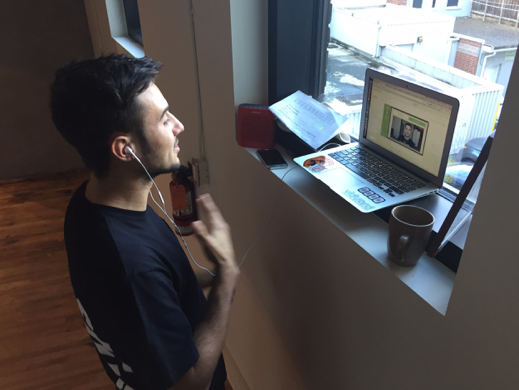
  • Keep it short (60-90 seconds). The number of people who sit through a video greater than 90 seconds drops to just 37%.
  • Use a pair of headphones with a built-in-mic to improve the audio quality of your video
  • Set your laptop up in a windowsill to get better, more natural lighting on your face

sales-email-video-recording

2. Screen Capture Videos

Need to share more than your pretty face? No problem, share your screen in a sales email to capture attention and communicate more information.

Dave’s is a great example:

With tools like ViewedIt, you can quickly create, send, and track screen capture videos directly within your browser. Here are a couple ideas to help you use this approach to stand out and get noticed in inboxes:

  • LinkedIn Profile: Craft a video walkthrough of your prospect’s LinkedIn profile, highlighting key aspects of their accomplishments that compelled you to reach out to them.
  • Owned Content: Walk through their website or an article they wrote to show them that you’ve taken the time to research how you would be able to add value to their role or company.
  • Product Tour: Capture a guided tour of your product or service created specifically for the prospective customer. Include their name, company, or logo in the demo to help them envision using your product.

The key here is finding the right thumbnail image or splash screen to include in your email. The thumbnail image can make all the difference as to whether or not your prospects click play on the video that you’ve made just for them. Better their LinkedIn profile or website than your product or website. Remember, this is about them, not you.

Just think: if you opened an email and your own LinkedIn profile was staring back at you, wouldn’t you be interested to hear what that video had to say about you?

Pro Tips:

  • Start with a compelling thumbnail image that will capture the recipient’s attention by showing them the video is custom just for them
  • Have all your tabs set up and loaded ahead of time so as not to waste precious time loading pages in your video
  • Be mindful of what’s in your inbox if you’re showing your email (sensitive company data, customer names or email addresses), or what notifications might pop up if you’re sharing your whole screen.  

3. Recap and Repurpose Content

After you’ve connected with a prospective customer, sending a video call summary can be easier and more effective than typing up a long email.

Record a personalized thank you message that will help build rapport by putting a face to the voice your prospective customer just spoke with over the phone.

If you have multiple points to cover, put them on a slide and capture your screen on video to help keep the conversation focused.

This is also a great opportunity to re-purpose existing video content from marketing and sales enablement like customer testimonials, product overviews or how-to content. Jenn shows how she does this in the following example:

You can curate the best video content to help keep the deal moving forward, and personalize it to the prospect by recording a custom introduction video. The end result is a highly personalized follow up that leverages the best assets you have to offer – all in just a few seconds.

Pro Tip:

  • Content without context is meaningless! Be sure to add context to the videos you’ve attached. Explain how they are applicable to the prospective customer and how they tie back to your recent conversation. This will make off-the-shelf video content feel super personalized and custom.

video in sales email webinar

The post 3 Sales Emails Proven to Boost Reply Rates by 8x appeared first on Vidyard.


source http://www.vidyard.com/blog/3-sales-emails-boost-reply-rates/

Monday, 5 December 2016

Nothing Breaks Barriers Like Trust: Wise Words from Yotam Dor

When you ask someone what they wanted to be when they grew up, chances are the answer you get doesn’t exactly line up with their current day-to-day. But for Notch Video’s Director of Community, Yotam Dor, his career isn’t too far off.

Having spent his childhood making stop-motion animated videos with his parents Hi8 camcorder, Yotam followed his video aspirations straight to post-secondary education. “After completing my masters in film and TV at the Savannah College of Art and Design, I was hired by SCAD to run the Research & Development centre they just launched. Getting that position at the centre was like a mini MBA,” Dor told me in an interview. He stayed at SCAD for two years before returning to Toronto. While he didn’t have a position lined up, Dor took advantage of the opportunity to build a network.

“I scheduled hundreds of coffees and met with everyone in film, TV and advertising,  even though everything in those traditional mediums felt a bit confined — especially after seeing the big world of R&D.” Eventually Dor met up with the team at Notch Video, and joined on as one of their earliest employees. “I wanted to do something that broke through the clutter, and I got really lucky to land at Notch Video at the incubation stage. And I was able to help build it from the ground up with some very talented people.”

Dor now wears many hats at Notch Video, working with new customers on business development all the way to serving as executive producer on larger projects. He also works closely with Notch’s network of over 800 freelancers, spread out across the entire country.

To find out more about the world of video production, and learn how companies and agencies can work more closely together, check out these videos from the rest of our interview:

What’s your favorite part of working in video production?

When I started making stop-motion videos with my parents Hi-8 Camcorder, I thought I was going to be an animator, and I treated video like an art. More of a one-person endeavor. Once technology got a bit more democratized though, with non-linear editing systems, I started making movies that required multiple roles, and I got the collaboration bug. So today I would say my favorite part of working in video production is the collaborative environment. Because making videos is such a team sport, you really have to build the right teams for every project. Every once in a while, I’ll grab my cellphone and go into the field and shoot a mobile video just to scratch that itch, but for the most part it’s collaboration that makes me feel really fulfilled.

How has video evolved since you started at Notch Video?

We started Notch Video as a reaction to a broken system. When we started Notch over four years ago, we saw that there was this massive opportunity to create video content for digital channels. At the time, there were no such things as social videos or micro-content, so the spectrum was TV on one end, viral videos on the other, and nothing in between. Client expectations were all about eyeballs. Currently I feel the scrutiny on video and video data is less about views and more about engagement and conversion, but that’s all very early days.

Are there any industries that you see missing out on video?

It really feels to me like almost every industry is using video these days, which we think is great! But there’s this amazing development in the B2B video world that we get really excited about.

There’s an awakening that business and customers are made of — shockingly — people. And that people want to watch engaging stories. I feel it certainly came around when Van Damme’s Epic Split video for Volvo came out and it’s continuing with everything that GE is making. So I’m excited by the potential to see more exciting B2B content, because that’s an exciting area to create content in!

How can businesses and agencies work together better?

Businesses and agencies need to build trust on both sides. If there’s this sentiment that one side is smarter or better you just lose trust. The strongest client relationships are forged over many years by delivering time and time again.

And there’s always going to be better tools, stronger workflows, and all those things. But trust building takes so much time to build, and moments to lose. Nothing breaks barriers like trust.

The post Nothing Breaks Barriers Like Trust: Wise Words from Yotam Dor appeared first on Vidyard.


source http://www.vidyard.com/blog/nothing-breaks-barriers-like-trust-wise-words-yotam-dor/

Thursday, 1 December 2016

Authentic Marketing is More Than a Myth: The Right Way to do Real People Campaigns

We all hear the same buzzwords in every meeting we sit down in. We all say the same buzzwords, including them in our PowerPoint presentations and word clouds. But in this industry, I think we can all agree that sure, ‘authentic’ has become a buzzword we all know we’re supposed to say – but is anyone actually doing authentic marketing?

The idea that ‘real people’ supposedly equals authenticity is one I hear a lot in this line of work – the idea that content should include a specific demographic because “Look, there’s your key to seemingly-genuine content!” But it doesn’t necessarily have to be about finding a real family simply because that’s another box you want to tick off. It’s about finding a real family because they have a story to tell. Because they already have the creative to help drive your campaign. So you want to launch a real people campaign? Here are the top 3 things to keep in mind:

1. Find the stories that matter

Quakers 2015 spot The Recital resonated with me to the point that I continue to reference it a full year later. Why? Because the people in it told a story I wanted to watch unfold. I myself am a working dad. I get the struggles of work/life balance. This story struck a chord with me because it’s 100% relatable and real – not just the people, but the story too:

How to use this for your own videos: Like I said above, think about yourself as a consumer – what resonates with you? Find the stories that resonate because they are powerful stories, not because there’s a hyper-relevant current event that you should probably force a story line around. Talk to people. Cold call. Fall down every hashtag rabbit hole you can find and build your narrative around the characters you stumble upon.

2. Let the characters speak for themselves

It’s obvious when this isn’t the case — when the brand speaks for that ‘real person’. When you see that text on your screen proclaiming that this isn’t a set up, that ‘these are real people, not actors’ and then listen to some clearly scripted brand plug come out of their mouth while the product sits conveniently — and obviously — on screen.

So what’s the solution? Let the people speak for themselves. The power of Pedigree’s ‘Dark to Light’ campaign, for example, isn’t in the fact that a brand is showing us a real person, saying “Look at us! We’re an authentic brand!” The audience is moved because this is a human being letting us in on her life.

She has a story to tell – and this video empowers us to actually hear it.

On the same token, Jack Daniels’ Our Town is a cool example of a campaign built completely around the people and the tone they evoke. This is the tone that seemingly guides the creative; it feels natural, entertaining and is fun to watch.

How to use this for your own videos: Once you’ve found your story (see above), bring this character into the equation as early as possible so their story can help guide the ebbs and flows of the narrative. It’s much more challenging (and far less effective) to do it the other way around. Audiences are getting smarter and smarter. The ‘these are real people’ captions on a screen don’t cut it anymore. Audiences need to believe this is a genuine story they’re watching unfold, so don’t tell them with some text and forced narrative. Show them with a story they can believe in.

3. Understand that ‘real people’ aren’t actors

I mean, actors might go to 3+ callbacks a week. They know the drill. The average Joe might not even know what a callback is, and likely doesn’t want to go to an audition or callback in the middle of their workday for the chance of maybe being in a commercial. The entire process has to be different, and it isn’t about fitting real people into a mold you’ve previously developed. It’s about digging for the stories your brand wants to tell and and allowing a little flexibility to let them unfold.

How to use this for your own videos: Be flexible. Understand that timelines might be different, that headshots aren’t a thing, and that having a script you want ‘real people’ to read from might not translate into the most believable commercial. To put it bluntly, most people aren’t good at acting – so don’t get them to act in a commercial.

That’s the biggest takeaway here in my opinion, because ultimately the key to these kinds of campaigns doesn’t lie in finding a real person. It lies in finding the right person. And it’s about letting that person be exactly what you hired them to be: authentically themselves.

The post Authentic Marketing is More Than a Myth: The Right Way to do Real People Campaigns appeared first on Vidyard.


source http://www.vidyard.com/blog/authenticity-buzzword-right-way-real-people-campaigns/